Equal Access to Professional Development

Growing_SchoolsJust as students deserve equal access to information resources and the services of a professional school librarian, classroom teachers also benefit from working with a professional school librarian. In “How some California schools are overcoming school librarian shortages” written for EdSource: Highlighting Strategies for Student Success  (spotlighted in the previous post), reporter Lillian Mongeau quoted Charles Drew College Preparatory Academy 3rd-grade teacher Laura Todorow: “I feel a school librarian is a non-negotiable necessity in any school.”

School librarians align the library collection with curricula and provide engaging books and electronic resources that support teachers’ teaching. They coplan and coimplement instruction to integrate literature and information into the classroom curriculum. Along with classroom teachers, they model and promote the behaviors of lifelong learning.

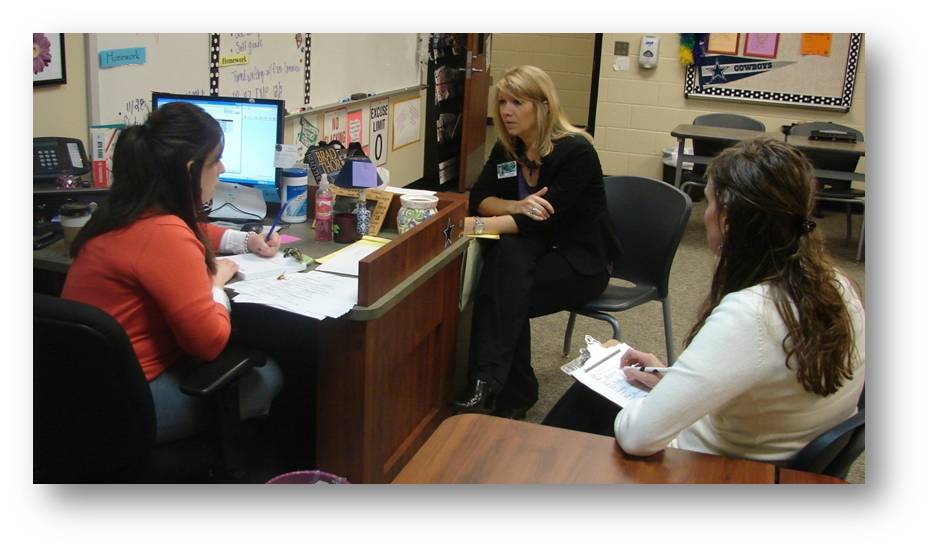
The National Education Association image “collaboration is everything” is spot on. When classroom teachers and school librarians coplan and coteach, they provide job-embedded professional development for one another. Teaching together in real time with real students, curriculum, resources, supports, and constraint helps educators become more proficient at their craft. Having a peer to bounce ideas off of and problem solve with is a growth opportunity that every educator should experience.

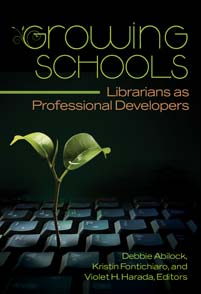
However, in schools without professional school librarians, classroom teachers, principals, and students may be unaware of what they are lacking. For educators who have not experienced the job-embedded professional development benefits provided by collaborating school librarians, I highly recommend Growing Schools: Librarians as Professional Developers (Abilock, Fontichiaro, and Harada 2012). Chapters in this book written by library practitioners and researchers alike highlight some of the many ways school librarians contribute to school improvement efforts.

School librarians can help the school learning community reach capacity. Through providing on-site professional development through coteaching, one-on-one faculty mentoring, and ongoing faculty workshops, school librarians are positioned as leaders who can assist principals in achieving their school improvement initiatives and reaching their academic goals for their schools.

All educators improve their instructional practices through working side by side with colleagues. On-site, job-embedded professional development is a win-win-win-win model for students, teachers, librarians/specialists, and administrators.

All educators deserve this kind of support for their own professional development. With so much pressure on teachers to improve student achievement, having real-time access to professional learning with a school librarian is a social justice issue for educators as well as for students. As Dr. Lankes states, “The greatest asset any library has is a librarian” (29). A professional, 21st-century, collaborating school librarian should be a non-negotiable necessity for every school.

Works Cited

Abilock, Debbie, Kristin Fontichiaro, and Violet H. Harada. Eds. Growing Schools: Librarians as Professional Developers. Santa Barbara, CA: Libraries Unlimited, 2012. Print.

Lankes, R. David. The Atlas of New Librarianship. Cambridge, MA: MIT Press, 2011. Print.

Mongeau, Lillian. “How some California schools are overcoming school librarian shortages.” EdSource: Highlighting Strategies for Student Success. 26 May 2014. Web.  2 June 2014. <http://tinyurl.com/CA-lib-staffing>.
 

Equal Access to Professional Development

Growing_SchoolsJust as students deserve equal access to information resources and the services of a professional school librarian, classroom teachers also benefit from working with a professional school librarian. In “How some California schools are overcoming school librarian shortages” written for EdSource: Highlighting Strategies for Student Success  (spotlighted in the previous post), reporter Lillian Mongeau quoted Charles Drew College Preparatory Academy 3rd-grade teacher Laura Todorow: “I feel a school librarian is a non-negotiable necessity in any school.”

School librarians align the library collection with curricula and provide engaging books and electronic resources that support teachers’ teaching. They coplan and coimplement instruction to integrate literature and information into the classroom curriculum. Along with classroom teachers, they model and promote the behaviors of lifelong learning.

The National Education Association image “collaboration is everything” is spot on. When classroom teachers and school librarians coplan and coteach, they provide job-embedded professional development for one another. Teaching together in real time with real students, curriculum, resources, supports, and constraint helps educators become more proficient at their craft. Having a peer to bounce ideas off of and problem solve with is a growth opportunity that every educator should experience.

However, in schools without professional school librarians, classroom teachers, principals, and students may be unaware of what they are lacking. For educators who have not experienced the job-embedded professional development benefits provided by collaborating school librarians, I highly recommend Growing Schools: Librarians as Professional Developers (Abilock, Fontichiaro, and Harada 2012). Chapters in this book written by library practitioners and researchers alike highlight some of the many ways school librarians contribute to school improvement efforts.

School librarians can help the school learning community reach capacity. Through providing on-site professional development through coteaching, one-on-one faculty mentoring, and ongoing faculty workshops, school librarians are positioned as leaders who can assist principals in achieving their school improvement initiatives and reaching their academic goals for their schools.

All educators improve their instructional practices through working side by side with colleagues. On-site, job-embedded professional development is a win-win-win-win model for students, teachers, librarians/specialists, and administrators.

All educators deserve this kind of support for their own professional development. With so much pressure on teachers to improve student achievement, having real-time access to professional learning with a school librarian is a social justice issue for educators as well as for students. As Dr. Lankes states, “The greatest asset any library has is a librarian” (29). A professional, 21st-century, collaborating school librarian should be a non-negotiable necessity for every school.

Works Cited

Abilock, Debbie, Kristin Fontichiaro, and Violet H. Harada. Eds. Growing Schools: Librarians as Professional Developers. Santa Barbara, CA: Libraries Unlimited, 2012. Print.

Lankes, R. David. The Atlas of New Librarianship. Cambridge, MA: MIT Press, 2011. Print.

Mongeau, Lillian. “How some California schools are overcoming school librarian shortages.” EdSource: Highlighting Strategies for Student Success. 26 May 2014. Web.  2 June 2014. <http://tinyurl.com/CA-lib-staffing>.

 

Professional Learning: Where Are the New Models? Part 2

07_advancing_character_map_team_ssTo continue with discussion of the Educational Leadership “Professional Learning: Reimagined” issue…

In their article, Emily Dolci Grimm, Trent Kaufman, and Dave Doty share their experience of “flipped peer observation.” This strategy is teacher-driven, classroom-embedded, and puts the educator who is being observed in the driver’s seat “as the leader and primary learner in the observation process” (25). After the educator identifies the target curricular standard to be observed, she invites colleagues to a meeting to share her focusing question and provide lesson background. During the observation, the observers collect data related to the targeted standard, and in a post-observation debriefing the educator and observer team discuss the outcomes in terms of the teacher’s focus. In their article, Grimm, Kaufman, and Doty provide guidelines for these three components and share the positive results of this process for one particular teacher.

Privileging the teacher’s voice and her own priorities for professional learning are the foundations for the success for this strategy. The multiple perspectives on instruction and students’ practice are strengths of the process they describe. But I wonder how many school districts will support a process in which a team of teachers must leave their own classrooms in order to provide this kind of professional development for their colleagues. This may work in schools with shared planning time during contract hours, but this level of commitment is beyond what I have experienced in the districts where I have worked or observed.

State-certified school librarians who serve in schools with flexible schedules and paraprofessional support have the opportunity to coteach with peers whenever the need arises. A classroom teacher or specialist and the school librarian can coplan (during the classroom teacher’s planning time) and schedule time for coteaching in the classroom, library, lab, on athletic field, or whatever environment is most conducive to students’ meeting the learning objectives. Along with their colleagues, they can achieve the goal of job-embedded professional development that improves the practices of both classroom teachers and school librarians and the learning outcomes for students. Win-win-win.

Last week on this blog, Judy Kaplan pointed readers to a crowdsourced video: Principals Know: School Librarians Are the Heart of the School.

Dr. David Loertscher who teaches school librarianship at San Jose State University asked his graduate students to conduct a content analysis of the video in search of keywords and concepts that were most often repeated by the ten school administrators from seven different schools in six different states. Their findings: “professional development” was the activity most often ascribed to effective school librarians and valued by these administrators.

To quote Principal Paula Godfrey, Gale Elementary School, Tucson, Arizona, “Professional development happens as teacher librarians and classroom teachers collaborate together on projects for their students.”

To me that is professional learning reimagined. That is truly job-embedded professional development—in which educators work toward shared goals and learning outcomes for students and learn with and from one another in real time with real students, actual curriculum, resources, supports, and constraints of their actual teaching environment. This is an opportunity on which classroom teachers, specialists, librarians, principals, and administrators should capitalize in order to help all educators reach their capacity and all students to reach their potential!

Works Cited

Debra (Librarian) and Melody (3rd-grade Teacher) Coteaching Photo from the Personal Collection of Judi Moreillon – Used with Permission

Godfrey, Paula. “Principals Know: School Librarians Are the Heart of the School.” April 2014. Web. Youtube.com. 8 May 2014. <http://youtu.be/bihGT7LoBP0>.

Grimm, Emily Dolci, Trent Kaufman, and Dave Doty. “Rethinking Classroom Observation.” Educational Leadership 71.8 (2014): 24-29. Print.


Professional Learning: Where Are the New Models? Part I

09_Advanced_jm_rt_writing_conferences_ssI believe that educators, school librarians in particular, should maintain a membership in the Association for Supervision and Curriculum Development (ASCD), read ASCD publications, and be as involved as possible in this organization. The target audience for ASCD’s journal Educational Leadership is “leaders in elementary, middle, and secondary education but it is also for anyone interested in curriculum, instruction, supervision, and leadership in schools” (quoted from the masthead of the journal).

In addition to the fact that school librarians should be leaders in curriculum and instruction in their schools, many principals are ASCD members and read Educational Leadership during the academic year. Since a principal’s understanding of the role of the school librarian in the learning community is essential to our success, school librarians should be able to talk with their principals on topics that ASCD identifies as important for their readership.

Last week when this month’s issue arrived in my mailbox, I was thrilled to see the title “Professional Learning: Reimagined.” I saved it to read until I could immerse myself in the content, which I did over this past weekend. Just to mention the foci of a few articles… The opening feature by Dr. Guskey, from the University of Kentucky, focuses on professional learning designed with backward planning from the desired student learning outcomes and evidence-based practice. Check. Articles on video capture of teaching, coaching, teacher-taught tech camps, and the failure of top-down approaches… Check. Dr. Richard DuFour, Professional Learning Communities (PLCs) expert, provides successful PLCs case studies. Check. While I don’t disagree with any of the articles in this issue, this issue fell short for me in terms of “reimagining” professional learning.

There were two articles in the issue that had the potential to delve deep into the growing understanding of the value of job-embedded professional development—one by Dr. DuFour and one by Emily Dolci Grimm, Trent Kaufman, and Dave Doty. I want to share some of Dr. DuFour’s ideas and build on those for a discussion of the Grimm, Kaufman, and Doty article on Thursday. I hope you have read this issue and will join in and make this a conversation.

In his article “Harnessing the Power of PLCs,” Dr. DuFour shares four case studies where PLCs using different strategies have been effective in supporting teachers to collectively improve student learning outcomes. He bases his article and scholarly work on research-based evidence that effective professional development is:

• Ongoing, with sustained, rather than episodic and fragmented, focus.

• Collective, rather than individualistic.

• Job-embedded, with teachers learning as they engage in their daily work.

• Results-oriented, with activities directly links to higher levels in student learning.

• Most effective in schools and districts that function as professional learning communities (31).

This research in consistent with my own experience as an educator and school librarian. The first four keywords italicized by Dr. DuFour are the very reason PLCs can be effective. However, in the four case studies discussed none of them mentions real-time job-embedded professional development where educators learn as they engage in their daily activities teaching students. While there is a collective focus on student learning outcomes and face-to-face or virtual observations of successful practices in other classrooms with other teachers’ students in the same school or across the district, none of these educators were learning while coteaching during the school day with a peer (one another educator) in the same classroom with their own students, resources, supports, and constraints.

Clearly, the PLC strategies offered in the article were successful for these schools but could they have been even more successful if educators’ professional learning happened in their own classrooms in the company of a coteacher who was equally invested in the students’ learning outcomes? My answer is an enthusiastic “yes!”

In DuFour’s article, Regina Owens, the first principal, at The Virtual School of Springfield ISD, noted: “In a traditional school, you hoped teachers implement the new strategy, but it was difficult to be certain” (35).

But there is a way to be certain in schools with a 21st-century school librarian. When classroom teachers and school librarians coplan for standards-based, data-driven instruction targeted to specific student learning outcomes, administrators can be assured that best practices are being implemented in the classroom and in the library. Two or more educators who coplan, coimplement, and coassess student learning outcomes can develop their instructional proficiency in job-embedded professional development learning with and from each other in real time.

What has been your experience of classroom-library collaboration that has led to improved student learning? How is this low-threat, organic strategy conducive to educator learning?

On Thursday, I will continue my response to this issue of Educational Leadership.

Works Cited

DuFour, Richard. “Harnessing the Power of PLCs.” Educational Leadership 71.8 (2014): 30-35. Print.

Judi Moreillon (librarian) and Rochelle Thompson (5th-grade teacher), cofacilitating writing conferences in Rochelle’s classroom, from the Personal Collection of Judi Moreillon – Used with Permission

Remodeling Literacy Together, Part 2

KQwMeg_Kilker_sizedTo continue responding to the results of NCLE’s “Remodeling Literacy Together: Paths to Standards Implementation” survey findings:

•    Teachers feeling most comfortable tend to be those more frequently working with others to analyze student work, design curriculum, and create assessments (NCLE).

Change involves risk-taking. It is essential to have respected and trusted partners when taking professional risks.

Who can help? A 21st-century school librarian must have the dispositions and skills to work with all her/his colleagues in the building. Everyone deserves support, especially when expectations change, and school librarians, who are required to work with all of our colleagues, are perfectly positioned to supply that support. When classroom teachers and school librarians coplan and coimplement lessons, and coassess student learning outcomes, librarians are providing the support teachers need and improve their own practice in the process. This is a win-win-win-win situation for all students, teachers, librarians, and administrators.

•    Teachers engaged in cross-discipline conversation about literacy are making greater shifts in their instruction (NCLE).

In many secondary schools, in particular, the disciplines have been working in silos: language arts teachers talking with language arts teachers, social studies with social students, science with science, and so on. Some schools have made strides in breaking down the institutional barriers between the disciplines because they know our brains do not learn or function in discrete-discipline-based ways.

Who can help? The work of school librarians has always been and will always be interdisciplinary. Reading and language arts are integrated into every aspect of the processes in which students engage while learning through the library program. Whether teaching reading comprehension strategies or inquiry-based research, school librarians must be knowledgeable about how students employ multiple skills and strategies to interact with ideas and information.

School librarians also have a global view of the learning community and can bring educators in different disciplines together to coplan, coteach, and coassess interdisciplinary units of instruction. This is a strength that school librarians bring to the table that can increase rigor and alignment in the academic program in any school.

•    When given the opportunity, teachers are owning the change by innovating and designing appropriate lessons and materials (NCLE).

Again it is no surprise that when teachers “own” the changes in their work environment, they bring their creativity, expertise, and experience to bear and design lessons and integrate resources that are more engaging and effective for learners.

How can school librarians contribute? School librarians must be experts in instructional design. They have experience working with students at various grade levels and in all content areas. School librarians keep abreast of the latest resources, print, digital, and human, and should always be seeking innovative ways to integrate resources into the curriculum for the benefit of students and teachers.

As a poster from the national Dewitt Wallace-Reader’s Digest Library Power initiative of the 1990s noted: “Teaching is too difficult to do alone. Collaborate with your school librarian!” I hope the results of the NCLE report will bring all the members of your school’s academic program together to coplan, coteach, and coassess student learning and that your school librarian will be among the leaders at your table.

Thank you to NCTE Executive Director Kent Williamson for being the catalyst to form the NCLE literacy coalition. This is survey is just one example of the power of organizations joining forces and working together to improve literacy learning and teaching for all.

Works Cited

“Remodeling Literacy Learning Together: Paths to Standards Implementation.” Literacy in Learning Exchange. 18 Feb. 2014. Web. 29 Mar. 2014. <http://www.literacyinlearningexchange.org/remodeling-together>.

Coteaching Photograph of Librarian Jean Kilker and her Colleague from the Personal Collection of Judi Moreillon – Used with Permission

Remodeling Literacy Together, Part 1

Cameron_collabplanning2The National Center for Literacy Education (NCLE)  recently published a report called “Remodeling Literacy Together: Paths to Standards Implementation.”

NCLE, which is a coalition of literacy organizations that includes the American Association of School Librarians, the International Reading Association, National Council of Teachers of English, and others, conducted a national survey of over 3,000 teachers to learn about their preparation and confidence related to implementing the Common Core State Standards (CCSS).

Whether or not you teach in a CCSS state, the findings of this survey should be of interest to everyone in the field of education. Every state, district, and school in the U.S. is placing an increased emphasis on raising the rigor in literacy teaching and learning. There are many leadership opportunities for school librarians in these findings.

•    Nationwide, teachers feel ill-prepared to help their students achieve the new literacy standards (NCLE).

I believe that all educators feel challenged to teach literacy skills. We know students need to master traditional literacy skills as well as 21st-century skills. This is a tall order when many children do not arrive at school with rich literacy backgrounds, need on-going support for applying reading comprehension strategies across genres, content areas, and grade levels and need to learn how to effectively use technology tools to interact with information and produce knowledge. This is a tall order.

Who can help? A 21st-century school librarian!

•    Working with peers is the most valued support for standards implementation (NCLE).

As a long-time collaborating librarian, this finding does not surprise me. I know that my colleagues and I have benefited tremendously through coteaching. The extra challenge for classroom teachers is that it is difficult for them to work with one another during the school day in order to achieve true job-embedded professional development. If educators combine classes, they have twice as many students whose needs they must meet. And few administrators have the flexibility to release teachers from their primary teaching responsibility so they can coteach with their peers.

Who can help? A 21st-century school librarian who can coplan and coteach with classroom teachers in real-time, with real students, real curriculum, real resources, real supports, and constraints of the actual teaching environment can be the peer with whom classroom teachers work. Through coteaching, we can help classroom teachers meet their need for standard-based lesson implementation and improve our literacy teaching practices together.

•    Time for working together in schools is decreasing (NCLE).

This is an ill-advised situation that school-level and district-level administrators should pay attention to and address. When new standards or initiatives are introduced into a learning community, educators need to break out of the isolation of their classrooms, labs, and libraries in order to ensure that innovations spread throughout the learning community.

Who can help? A 21st-century school librarian has expertise in using technology tools for asynchronous collaboration. Using Google Drive docs, wikis, and other Web 2.0 tools to conduct collaborative planning can provide effective venues for working together when face-to-face time is short or not readily available.

On Thursday, I will respond to some of the additional findings of this important data from the field.

Works Cited

“Remodeling Literacy Learning Together: Paths to Standards Implementation.” Literacy in Learning Exchange. 18 Feb. 2014. Web. 31 Mar. 2014. <http://www.literacyinlearningexchange.org/remodeling-together>.

Coplanning Photograph of Librarian Stacy Cameron and her Colleagues – Used with Permission

Swiss Army Knives: Teacher Librarians

12065701021002992326klsgfx_Swiss_Army_Knife.svg.med

Looking for some cool tools in your classroom?  Think about the utilitarian roles of the teacher librarian-think Swiss army knife.  That’s how one teacher describes the impact of the teacher librarian in schools.  In a recent blog post on Edutopia, Josh Work, a middle school teacher from Maryland, shares his take on collaboration that is at the heart of his daily practice in his school.  That collaboration in teaching and learning is with the teacher librarian. This blog is a must read for all of us who strive every day to become embedded in the educational fabric of schools as teacher librarians/media specialists.

From Josh’s experience, he sees the teacher librarian as a leader in the implementation of the Common Core State Standards and technology integration.

“I have found the most valuable school-based resource for brainstorming, discussing, planning and implementing anything to do with technology has been my school’s media specialist.”

“…Media specialists are an amazing building-level resource for anyone that takes the time to collaborate with them.”


As in many cases, the collaboration began in simple ways, with a quick face to face conversation that grew over time to brief meetings, and then later to include co-planning and co-teaching curriculum. He also goes on to give some advice to other teachers about enlisting help from the building media specialist/teacher librarian.

Whether or not the Swiss army knife is an image you have of yourself, it’s great to learn about successful collaborations with teachers from another perspective. In fact, the metaphor does represent the multiple facets of our morphing role, so let’s embrace it.

Hearing from colleagues such as Josh who understand and appreciate the expertise and knowledge that we provide, is refreshing, and affirms the work that we do. It also gives us incentive to try harder, even in the face of budget cuts and increasing demands on teachers’ time.  Together, we all can make the shift in instructional design and practice if we continue to embrace partnerships to meet the challenges of teaching and learning in today’s world.

Thank you, Josh, from the bottom of our hearts.  We think you are sharp, too!


References:

Work, Josh. (2014)  “The Shift: Media Specialists and the Common Core.” Edutopia  (weblog) March 18, 2014. http://www.edutopia.org/blog/media-specialists-and-common-core-josh-work

Image: Clkr.com: Swiss army knife


One Principal’s 4 Cs

scrabble_collaboration_sized2To follow up on Judy Kaplan’s post “We are not alone,” I want to spotlight a blog post by Principal Jan Iwase. Ms. Iwase is the principal at Hale Kula Elementary School in Wahiawa, Oahu, Hawaii. Last year on her Collaborating, Communicating, Critical Thinking, and Creativity Blog she posted “It’s more than a place to borrow books.”

There are so many kernels of wisdom in Jan’s understanding of how a state-certified professional school librarian makes a positive impact on the academic program in her school. Here’s a brief summary:

• Planning with the principal for a library vision • Instituting a flexible schedule in order to provide resources and serve students and teachers at the point of need • Modeling the use and integration of technology into the curriculum • Changing the mindset of classroom teachers for how the library and librarian should be used

And what I especially appreciate about this post is Jan’s summary of what a school librarian contributes in terms of helping students navigate electronic resources:

“Just because information is readily available electronically does not mean that students know how to choose the right resource, how to skim and scan to find answers, how to take notes and organize them in a meaningful way, and how to summarize and share that information with others. That is why the librarian is an important resource in the school.”

This list of information literacy strategies is also a list of reading comprehension strategies. It is not surprising, then, that when school librarians and classroom teachers collaborate for instruction, students’ reading proficiency improves. When classroom teachers, school librarians, and principals work together, students benefit. Classroom-library collaboration for instruction is a win-win-win-win opportunity – Collaborating, Communicating, Critical Thinking, and Creativity – for all.


Collaboration Scrabble Tiles Photo by Judi Moreillon


Educator Evaluation: A Messy Construct

a-trphy2I follow the posts on the MiddleWeb blog. On January 27th, Elizabeth Stein posted “Co-Teachers: What a Tangled Web We’re In.”  In her post, Elizabeth focuses on serving the needs of special education students through coteaching and poses thoughtful questions about how educators should or can be evaluated in coteaching situations in terms of student learning outcomes. Her concerns and questions remind me of several conversations I participated in at the ALA Midwinter Meeting in Philadelphia last month.

One of the challenges in determining a causal relationship between teachers’ teaching and students’ learning outcomes is a false assumption that there can be a valid, undisputable cause and effect relationship between individual teacher’s teaching and individual student’s learning. In middle and high schools, interdisciplinary learning and teaching must be considered. For example, a student’s ability to comprehend a narrative math problem may be the result of her learning in English language arts as much as her learning in math class.

Other educators in the building such as librarians, reading and literacy coaches, music, art, P.E., special education teachers, and more (to say nothing of the home and community influencers) all contribute in varying degrees to students’ learning outcomes on any particular assignment or standardized test question for that matter. Even in a self-contained elementary school classroom, other educators in the building may make a measurable difference in student learning.

How then can students’ standardized test question results be ascribed to the teaching efficacy of one teacher and one teacher only? This may be especially problematic for school librarians whose work focuses on teaching students processes that are transferrable to all content areas and contribute to their ability to be effective lifelong learners.

Is it possible to drill down into test results and determine a causal relationship? Do you agree that teacher evaluation tied to students’ standardized test scores is a messy construct? What are your ideas about how to address this issue from the perspective of coteachers — and school librarians or special education teachers, in particular?

Clip Art from Discovery Education

Building Bridges, Weaving Threads

bridge

During the month of January, BCC bloggers have explored a variety of themes that reflect the ever changing role of the teacher librarian in the school community, but one consistent thread has emerged. The role of bridge builder and ombudsman for connecting all the stakeholders-administrators, classroom teachers, specialists, parents, community members, and students-is one that needs to be cultivated intentionally and with forethought.  I suggested a goal for reaching out to a new audience, not just preaching to the choir.  Judi wrote about breaking down the silos between professionals through the blogosphere with an upbeat response to promoting classroom and school libraries together.  Sue shared her own experiences as a bridge by providing library collections for classroom teachers, and Melissa honed in on advocacy as a means for building connections and partnerships between teacher librarians and stakeholders.  A key message from all of these ideas is the need to be proactive, and not reactive.

A good way to begin bridge building is to get out of the school library and into classrooms and other learning spaces in your school. Even if you are on a fixed schedule, make time to walk in others’ shoes, see challenges through others’ eyes.   Listen closely and observe what is happening. Be a detective. Take note of initiatives, demands on schedules, or problems that might impede learning that effect the whole school environment.   Find out what is on the principal’s hot list, because s/he is usually on the hot seat!  Then ask yourself, how can I be part of the bigger picture, and align the school library program with the wider school community?

Tracey Wong writes in the October 2013 issue of Library Media Connection, “I learned that building bridges is a way of life if you are passionate about your work.” (30)  Once at loggerheads with her principal, she was able to turn the relationship around by using five key points for building bridges learned in an advocacy class with Deb Kachel at Mansfield University.  She goes on to describe the five points and how they continue to guide and improve her school library program, as she grows professionally and personally as she collaborates with multiple stakeholders. The five key points for building bridges include building communication, community, relationships, partnerships, and resources.  To see how she flipped her thinking and became proactive, read the entire article!  It’s inspiring and presents a model to follow.

How do you build your bridges?


References:

Wong, Tracey. 2013. “Building Bridges.”  Library Media Connection 32 (2): 30-1.


Image: Microsoft Clipart