Trending Now: Professional Learning

collaborationLast week, I presented some suggestions for teacher librarians who set goals for providing appropriate PD opportunities within a school community or district.  As you begin to frame your goals, you may want to access some techniques and strategies for best practice in professional learning for adult learners, and I would like to share some timely resources that might influence your planning.

Find out about instructional coaching:

Professional learning has become a job embedded practice in many school districts across the nation, and many teacher librarians have stepped into professional development roles, either intentionally, or by serendipity, on a “just in time” basis. To be successful, it helps to understand the overarching goal for PD in your school, and to work within the model. The trend in PD is away from the “sit and git” inservice days to personalizing professional learning for teachers through instructional coaches, and teacher driven collaborative and reflective practice.  There may be instructional coaches in your school and district, and you may be able to work with them in assisting with personalized professional learning with members of the faculty.  Sometimes, instructional coaches are experts in content or curricula, such as literacy, math, or science. Sometimes their focus is on pedagogy or technology integration, or all of the above, depending on the particular educators’ professional learning interests. Before you reach out to instructional coaches, take some time to find out about concepts and models for instructional coaching, so that you can “talk the talk and walk the walk.”

Recently on the Edutopia Blog, Schools That Work, there have been some posts about the instructional coaching model in the Albermarle County (VA) School District.  The Superintendent of Schools, Dr. Pam Moran, has garnered national attention for providing leadership for innovation and change in the district to the benefit of the students and the teachers.

 Here’s the link that shows what is happening in Albermarle County Schools. There’s a list of links to videos and information about several topics that are of interest to teacher librarians, and a couple are highlighted below.

Visit the Albermarle County School District website to learn more about the instructional coaching model: https://www2.k12albemarle.org/dept/instruction/instructional-coaching/Pages/default.aspx

Find out what has worked for others:

My second recommendation for exploring successful models for professional development practice is Growing Schools: Librarians as Professional Developers. (2012)  Even though it was published three years ago-my where did those three years go-it remains a go to resource for teacher librarians.  Not only is it packed with useful ideas, it is entertaining reading! Edited by Debbie Abilock, Kristin Fontichario, and Violet Harada, it is a must have for your shelves, if you don’t have it already. Many of the contributors to the book are leaders in the field of school librarianship, including  BACC co-blogger, Judi Moreillon, who has written a chapter on customized professional development.

According to Kristin Fontichario, in a article published in School Library Monthly (2013):

For nearly two years Debbie Abilock, Violet Harada, and I have worked with approximately a dozen librarians, classroom educators, and administrators to document their unique professional development stories… the book’s contributors showed us that professional development can be effective in multiple school cultures, in multiple modalities for delivery, with librarians of different personalities and preferences, and in various curriculum areas and foci (2013, 47).

 Here’s a link to the publisher’s information about the book:

http://www.abc-clio.com/LibrariesUnlimited/product.aspx?pc=A3723P

Order it soon for your own professional learning!  Do you have more recommendations to share?


Works Cited:

Abilock, Debbie, Kristin Fontichario, and Violet Harada, eds. Growing Schools: Librarians as Professional Developers. Libraries Unlimited, 2012. http://www.abc-clio.com/LibrariesUnlimited/product.aspx?pc=A3723P

 Edutopia: Schools That Work Case Study. “Innovation and Risk Taking Across a District.” Web Log. http://www.edutopia.org/school/albemarle-county-public-schools. 28 Sept. 2015.

 Fontichario, Kristin. “Librarians As Professional Developers.” School Library Monthly 29.8 (2013): 47-48. Library Literature & Information Science Full Text (H.W. Wilson). Web. 28 Sept. 2015.

Image: Judith Kaplan Collection


Co-Assessing Collaborative Work

DSCN0159

Successful instructional partnerships are bread and butter roles for the teacher librarian in educational communities. Classroom teachers and other specialists who partner with TL’s find that everyone works better, and works smarter. This month BACC bloggers have been providing ideas that support collaborative practices for co-teaching and learning.  True collaborative relationships are developed with time and experience, and involve teaching partners who co-plan instruction, co-teach, and co-assess students together in an active learning model. Judi, Lucy, and Karla have highlighted key pieces for each component in collaborative partnerships that contribute to a win/win for both educators and students.

In order to work closely with another educator, teacher librarians have to build confidence and trust with a partner. As Judi said, co-planning involves knowledge and skills in pedagogy and content standards by both partners. Combining expertise and taking responsibility for sharing tasks for delivering instruction and assessment means that you have to be able to talk the talk and walk the walk.  If the process is to be a partnership, not a dual track distribution of who does what,  partners need to build opportunities for self reflection and communication into the collaborative model of teaching.  Critical thinking and creativity abound when teaching partners share ideas and insights from different perspectives.

Reflection and Communication While the Co-teaching Plan is in Progress:

Time is at a premium for co-planning and co-assessing, and often these tasks are done on the fly outside the class time through shared documents and folders, IM, Skype, email, or a learning management system interface such as Edmodo or Moodle. Face to face synchronous sessions should be a priority, too, and built into the schedule for both partners.  During the implementation phase of the co-teaching plan, partners set up a framework to check in and assess the daily/weekly progress or challenges of the students, and the learning plan.  The framework can include a process for students to keep track of their work in blogs, in online discussions, Google documents, forms, and so on. Open accessibility to student work allows communication between teacher and students in a continuous feedback loop, or to ask/answer student questions.  Responsibility for responding and tracking students can be divided between the partners, but there also needs to be a process for continuous conversations about  adjustments to lesson plans and learning activities based on the variability of students on the road to achieving learning outcomes. Sometimes the road that has been laid out needs to take some unexpected turns. That is what makes the co-teaching so organic and interesting. No need to wait until the planned activities are completed before co-teachers review the plan.

If our expectation is for students to be metacognitive and reflective in their learning, educators should be mindful of that in their collaborative teaching, also.

During the year, I have been following Buffy Hamilton’s excellent blog posts (Unquiet Librarian, 2015) that demonstrate reflection about co-teaching that highlight the dynamics of her work with colleagues in a high school.  I have mentioned her blog before, but it continues to be a source of inspiration.  Take a minute to read this post that shows that partnerships can include teachers and students, too. It is clear that the communication between the partners is continuous and thoughtful, and leads to changing ideas. You will want to retrace many of her other posts, too.

Post Instruction Review and Reflection:

Once the co-teaching plan has been completed, it is equally important for partners to take time to reflect together on the process and the success/and or challenges that were encountered along the way.  Once again, time is always an issue, so partners need to make sure to have some face to face conversations and analysis about the evidence that has been collected to show that students were able (or not) to transfer their understanding and demonstrate knowledge and skills.  This is an important piece of evidence based practice for both teaching partners.  The collaborative work should be documented and shared with administrators and other stakeholders, and will lay the groundwork for repeating the curriculum unit another time, or to begin to build another collaborative experience.

Key ideas to assess with a critical stance:

  • Process/Learning Plan-what was successful? What didn’t work? What misconceptions became evident? What adjustments should be included?
  • Product-Was the performance task authentic and did it demonstrate student learning? Are there changes that need to be made?
  • Student reflection and feedback-How did the students respond to the process and the learning?  What are their suggestions for improving the learning plan?
  • Communication-How effective was the communication between partners?
  • Individual reflection-Impact on my own teaching and learning

Once you find your teaching partners, they will want to join the party, too.  Tell us about your adventures in co-teaching-it’s all the rage!

Works Cited:

Hamilton, Buffy. “Bridge to Presearch and Growing Student Understandings: Connect, Extend, Challenge.” Unquiet Librarian. Weblog. March 4, 2015. Accessed June 24, 2015. https://theunquietlibrarian.wordpress.com/2015/03/04/bridge-to-presearch-and-growing-student-understandings-connect-extend-challenge/

Photo:

Judy Kaplan Collection


Coplanning for Student Success

wordle_lesson_planningWhen classroom teachers and school librarians coplan standards-based lessons and units of instruction, they can experience the two-heads are better than one phenomenon. Each educator brings a unique perspective as well as knowledge, skills, talents, and teaching style to the collaboration table.

Both classroom teachers and school librarians must know the standards. Whether the Common Core or other state standards. Classroom teachers have more familiarity with the background knowledge and skill development of the students in their classrooms. School librarians bring their knowledge of the resources of the library and beyond as well as strategies for integrating technology tools into lessons. Together, these equal educators have the potential to develop more creative, more engaging, and most of all, more effective instruction for students.

Many school librarians and classroom teachers find it helpful to use collaborative planning forms to record their ideas as they brainstorm and plan. Often the school librarian takes responsibility for making notes and/or completing the planning form and using it to rough out a lesson or unit plan, which both partners fine-tune. These are some sample elementary level (Chapter 1) and secondary level planning forms that can be downloaded from the Web.

In the 2014-2015 school year, Kelly Hoppe school librarian at Palo Duro High School in Amarillo, Texas, coplanned with 9th-grade pre-AP English language arts teacher Jessica Wilcox for a year-long collaboration. Jessica felt that even though her students were on the pre-AP track, they weren’t skilled library users. She wanted to do something that would immerse students in library skills and critical reading skills using YA and classic literature. Together, Jessica and her school librarian Kelly collaborated to create a year-long program to meet these students’ needs.

Jessica and Kelly began by helping student learn how to use the library more effectively. Along the way, they discovered that students needed more support with how to make sense of difficult texts that were above their proficient reading level. These coteachers will have an article in the August issue of Voices of Youth Advocates (VOYA) that describes their collaborative process and the results of their coteaching.

Works Cited

Wilcox, Jessica. “Teacher Librarian Collaboration.” YouTube.com. 2015. Web. 29 May 2015. <https://youtu.be/d9WHb8i8v5I>.

Word cloud created at Wordle.net

Advocating for Instructional Partnerships

Teaching_too_difficultI am a passionate advocate for school librarians’ instructional partner role. Research and my own experience suggest that classroom-library collaboration is a best practice and results in improved student learning outcomes.

While building relationships with classroom teachers, it is critical for school librarians to build relationships with influencers and decision-makers. Principals and school superintendents who understand the impact of coteaching on student learning can help create the ideal environment for this practice: a state-certified professional school librarian, a flexibly scheduled libraries with sufficient support staff and a budget that affords engaging resources and technology tools.

Principals and superintendents can advocate for vibrant school library programs. School librarians can collect and share stories designed to meet these decision-makers’ priorities as well as touch their emotions. There is a growing consensus about the importance of educators’ expertise to impact student learning. School librarians can collect advocacy stories from classroom teachers who can tell the stories of improvements in both their teaching and students’ learning as the result of classroom-library collaboration for instruction. Here are some examples.

I appreciated the three things we were told to consider when “Communicating the Story”: What libraries and librarians really do that’s unique and valuable; why it matters in terms of their values and their priorities; and why it is urgent. Classroom-library coteaching answers all three of these questions for the administrators we seek to influence.

School librarians are in a unique position. Similar to principals, we have a global view of the learning community. We know the entire curriculum; we work with all students and teachers in all disciplines. We know the resources that can help our teachers and students succeed. This global perspective is valuable to the learning community in determining what students must know and be able to do. We can help teachers plan across grade levels and content areas because we see the big picture.

Principals and superintendents are focused on teacher improvement. When two educators—a classroom teacher and a school librarian—coplan, coteach, and coassess a lesson or unit of instruction, they learn from one another. This kind of job-embedded professional development can be part of the daily work of educators; it doesn’t cost anything (except as noted above in terms of scheduling, staffing, and resources). Coteaching happens in real time with real students. The results are observable by these decision-makers; the results in terms of student learning can be tangible. A culture of collaboration can transform a school or district.

The urgency of improving teachers’ teaching and students’ learning will be clear to these administrators who are held accountable for student achievement by parents, school boards, and state- and federal-level education agencies. We cannot let students fall behind in reading comprehension, applying information-seeking processes, or using technology tools. These are basic and recognized 21st-century skills that can help our students be competitive in a global society and economy. Teachers must be up to date with strategies to meet these objectives.

Finally, I want to borrow a slogan from a national school library advocacy campaign from the Dewitt Wallace-Reader’s Digest Library Power Project from 1990s. I believe it frames the message school librarians want/need to share in order to influence today’s decision-makers. “Teaching is too difficult to do alone. Collaborate with your school librarian.” This was true at the dawn of the Information Age and it is even truer now. Framing our message in terms of what teachers need is a way to show principals and superintendents that they have a partner in the school librarian—a partner who can help them meet their goal of an effective teaching force in our schools.

Image: Remix of Library Power Slogan. Dewitt Wallace-Reader’s Digest Library Power Project

On the Horizon

ocean_sunset_with_sailboat_and_seagulls_as_the_sun_sinks_beneath_the_horizon_0515-0909-2920-5913_SMU

This month, Judi and Lucy have highlighted some ways that school libraries and teacher librarians have continued to provide resources and instruction that support the variability of all learners in a diverse school community. At the heart of our mission is the concept of equitable access to information and the freedom to read a range of literature in many formats. Another part of the vision for library service is to provide a safe and welcoming environment for active learning for contemporary learners to “Think-Create-Share and Grow.”

On a personal level, teacher librarians get to know learners’ individual reading tastes, interests, strengths, and challenges in a setting other than the classroom. Often, we have a longer view of student growth over time because the school library space is a constant from year to year. We develop relationships with students that extend through their time in elementary, middle, or high school as we see their talents and personalities evolve. I always found that to be one of the most rewarding aspects of my work.

As Lucy has said, “to remain effective and relevant, we must constantly update our skills and keep up with the movements and trends affecting our practice.” Now there is a new/old opportunity on the horizon for teacher librarians in the emerging field of personalized learning, and we should be ready to collaborate with our teaching colleagues in a shift from teacher centered learning to student centered learning that has the potential to change teaching practice now and in the future.

Emerging technologies and new pedagogies focused on learners and learning have already brought about tremendous change in the traditional classroom, and there is more to come.

What is personalized learning?

Personalized learning is a term that is used to describe many approaches to customizing instruction in the field of education. The term is used in multiple ways to describe an approach to learning that gives students voice and choice in their own learning. When learning is personalized, teachers help students set goals based on their interests, knowledge, and skills. As “guides on the side,” teachers help them to develop learning plans to achieve the goals, and monitor progress. The objective is for students to master competencies and demonstrate evidence of learning through performance. Self-assessment and reflection are integral to student success in mastering learning. Gradually, students will be able to take responsibility for their own learning and chart their own pathways for the future.

Personalization of learning, personal learning plans, and performance portfolios will impact the way that students will be using classroom and library learning spaces, and how teachers and teacher librarians interact with students. Students will be trained to set personal goals, and to develop a system for designing what, why, and how they learn.  Teachers will become coaches, and provide instruction as needed, and how this will impact the traditional way that schools and curricula are designed is in transition.

Why should teacher librarians be at the PL table?

When you look at Standards for 21st Century Learners (AASL 2007), the dispositions and competencies in the document align with concepts for personalized learning. These are the standards that teacher librarians use to guide their daily practice in designing learning for students. Along with Common Core State Standards, or other state standards as frameworks to guide curriculum, teacher librarians collaborate with colleagues to create meaningful and engaging performance tasks that provide authentic learning opportunities. Teacher librarians are already in the business of partnering with students in their inquiry, problem, project, and place-based learning assignments, so personalized learning is an extension of their professional practice.

Across the nation, there are 41 states and the District of Columbia that are in various stages of exploring, developing, or implementing competency based education policies that are driven by personalized learning for students. The state legislation or education rules already in effect or being proposed provide “flexible pathways” for determining graduation requirements from high school. Instead of using the Carnegie Unit (time), there can be alternative ways to evaluate performance through mastery of competencies, and local school districts are charged with developing systems for tracking individual performance, and mastery. This is a major paradigm shift in educational delivery models, as well as a change in school culture. There is lot to talk about, and teacher librarians should be part of the conversation, too.

How can I learn more about personalized learning?

There are journals, websites, and professional texts that are excellent resources for gaining understanding about the concepts and challenges for shifting the way we approach teaching and learning for our increasingly diverse learners in an age of information and ubiquitous technology.

Here some recommendations that you can share with your colleagues to get the discussion rolling:

  •  Barbara Bray and Kathleen McClaskey. Make Learning Personal. Thousand Oaks, CA: Corwin, 2015. Website: http://www.personalizelearning.com/
  • John H. Clarke. Personalized Learning: Student-Designed Pathways to High School Graduation. Thousand Oaks, CA: 2013.
  •  Allison Zmuda, Greg Curtis, and Diane Ullman. Learning Personalized-The Evolution of the Contemporary Classroom. San Francisco, CA: Jossey-Bass, 2015.
  • Competency Works website:
  1.  State Policy Resources http://competencyworks.pbworks.com/w/page/67261821/State%20Policy%20Resources
  2. A Snapshot of Competency Education Policy Across the United States http://www.competencyworks.org/wp-content/uploads/2013/12/inacol_competency_snapshot_oct_2013.pdf

It’s time to get personal!

 Next week-A look at models for PL in practice.

Image:

http://www.birdclipart.com/bird_clipart_images/ocean_sunset_with_sailboat_and_seagulls_as_the_sun_sinks_beneath_the_horizon_0515-0909-2920-5913_SMU.jpg


Resources to Support All Learners

sign_tagxedoThis month the BACC co-bloggers will share thoughts and examples of the school librarian’s role in differentiating instruction so that all learners have opportunities to succeed.

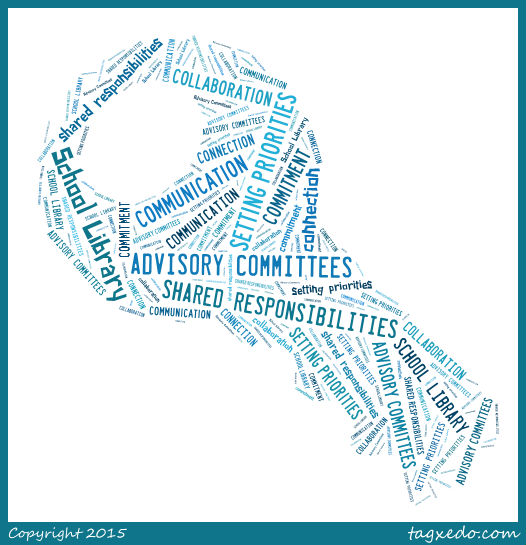
This word cloud image encapsulates many keywords associated with learning through the school library program. The work that school librarians do in their schools is always interdisciplinary and supports students in making connections to crystallize their learning.

English language arts learning objectives related to reading, writing, listening, and/or speaking are part of every lesson we coteach. We collaborate with educators teaching various grade levels and all content areas. The learners we work with have a wide range of background knowledge and are at various measures of proficiency for any skill or strategy we set out to coteach.

How does the library environment support the differentiation that students need to succeed?

Due to ubiquitous access to the library’s electronic resources and the Internet, some classroom teachers and students may think that involvement with the library’s print collection is unnecessary. For those who take that view, I highly recommend reading “Why digital natives prefer reading in print: yes, you read that right,” an article that appeared in the Washington Post on February 22, 2015. The article notes: “Readers tend to skim on screens, distraction is inevitable and comprehension suffers.”

I have had this experience more times than I can count. After introducing an online pathfinder of electronic resources, high school students quietly call me over to whisper in my ear, “Isn’t there a book about this?” Classroom teachers are often surprised by such student requests; I am not.

With the print and electronic resources of the library and the Internet, school librarians develop expertise at integrating resources in multiple genres and formats into students’ learning opportunities. Of course, classroom book collections offer some range of resources, but the library collection’s range is far wider. School librarians develop print collections at the widest possible range of reading proficiencies on topics that cover all areas of the curriculum.

School librarians’ ability to connect the “just right” resources to meet each learner’s needs is one of the strengths, in terms of differentiation, that we bring to the classroom-library instructional partnerships.

Works Cited

Rosenwald, Michael S. “Why digital natives prefer reading in print: yes, you read that right.” Washington Post.com. 22 Feb. 2015. Web. 02 Mar. 2015 >http://www.washingtonpost.com/local/why-digital-natives-prefer-reading-in-print-yes-you-read-that-right/2015/02/22/8596ca86-b871-11e4-9423-f3d0a1ec335c_story.html>.

Word cloud created at Tagxedo.com

School Library Advisory Committees: The Key = 4 Cs

key2What are the keys to an effective school library advisory committee? I propose these: Communication-Connection-Commitment-Collaboration.

Communication:
If classroom teachers have not had positive input into school library collection decision-making, then they may refer to the library collection as the property of the librarian. When a classroom teacher tells students to be careful with “Ms. Jones’s books” (the librarian’s books), the wise school librarian will make it clear that the library collection belongs to all of the library stakeholders: students, teachers, administrators, and families.

Once collective ownership is established, the librarian can invite classroom teacher colleagues to join the school library advisory committee in order to participate in decision-making regarding library purchases and initiatives, such as grant writing and literacy events.

Connection:
The wise school librarian will ensure that the resources of the library are aligned with the curricular needs of classroom teachers and students. While the Common Core State Standards may make this a library goal in many states, the school library has always been charged with providing resources and technology tools to support teaching and learning the required curriculum.

Commitment:
In most schools, the school library advisory committee will meet during before or after school hours. It will be important for the school librarian to honor the extra commitment it will take for classroom teachers to participate in developing the library collection as a shared resource for the school community. Likewise, the school librarian’s commitment to shared decision-making must be genuine and clear to all advisory committee members.

Collaboration:
One of the most outstanding benefits of a library advisory committee is increased collaborative teaching between classroom teachers and school librarians. When advisory committee members have shared responsibility for selecting resources, they will have a shared commitment to using those resources for standards-based instruction. While classroom-library collaboration ensures that valuable resources will be integrated into instruction, it can also improve educators’ teaching and students’ learning.

School library advisory committees that achieve the four keys, communication-connection-commitment-collaboration = win-win-win-win for all library stakeholders.

Word cloud created at Tagxedo.com


Badging for School Librarians

TEKS_AASL_Alignment_Badge_unitag_qrcode_1_sizedMy online learning from the Library Journal webcast entitled “Participatory, Continuous, Connected: Top Trends from Library 2.014” Continued…

Susan Hildreth, Director, Institute of Museum and Library Services (IMLS), shared her excitement about “radical change” in library services. She emphasized the role of libraries in communities and meeting the 21st-century needs of library users and soon-to-be users alike. She began her talk referring to initiatives related to STEM, STEAM, and STREAM (various efforts to promote science, technology, reading engineering, the arts, and math learning and careers).

In addition to sharing some of the exciting projects IMLS is currently funding, Ms. Hildreth talked about her views on the role of libraries in makerspaces and badging. When thinking about virtual professional development for school librarians, I am most interested in badging, which Ms. Hildreth describes as making informal learning visible. Two challenges she cited in badging related to who decides the criteria for a particular badge and how are various levels of competency part of the process.

To share one school librarian example, the Texas Learning4Life Implementation Team crowdsourced the TEKS Alignment wiki that aligns the Texas Essential Skills (TEKS) English language arts and reading standards for K-12 learners with the American Association of School Librarians Standards for the 21st Century Learner.

After standards were aligned, we formed a Lesson Plan Peer Review Committee and began soliciting exemplary lesson plans for publication on the site. As of this date, thirty-nine lesson plans have gone through a peer review process and have been published. A number of the librarians coauthored their lesson plans with classroom teachers and specialists and ALL lesson plans are based on coteaching (a school librarian and classroom teacher working simultaneously with students). Each contributor earned a badge, which they can display on their library Web site and include in their monthly newsletters, annual reports, and on their résumé.

Making this kind of informal learning formal is one way for school librarians to show they are continuing to develop their lesson planning and collaboration skills while on the job. This badge carries meaning to those who have earned it, and hopefully to those with whom they share it–principals, district-level librarian supervisors, and classroom teacher colleagues.

Yes! to virtual professional development in all of its many manifestations. This is an innovation from which we can all benefit.

And I highly recommend following Ms. Hildreth on Twitter (@IMLSDirector), reading more about the IMLS focus especially if you are considering a grant proposal to fund an innovation, and following the IMLS blog.

Building a Culture of Collaboration blog readers: Check out the Library Journal webcasts and Library 2.014 archives for outstanding opportunities to explore —  from topics about which you are passionate to ones about which you are clueless! Taking full advantage of online professional development is an innovation that meets the needs of time-strapped librarians and educators who have a desire to engage in participatory, continuous, and connected professional development.

Image: Badge from the TEKS Alignment Wiki

Joint Professional Development Works

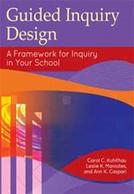
gid_sizedWhen the school year ended in Denton (Texas) Independent School District (DISD), the Denton Inquiry 4 Lifelong Learning Project (DI4LL) sponsored a two and a half day workshop with Dr. Leslie Maniotes, coauthor of Guided Inquiry Design: A Framework for Your School (Libraries Unlimited 2012). The workshop, which was funded by a grant from the Texas State Library and Archives Commission (TSLAC), was designed for preK-12 DISD school librarians to build on the book study they had conducted. School librarians were asked to invite their classroom teacher or specialist colleagues to participate with them, and most of the librarians who attended came with one or more colleagues. I attended as the DI4LL educational consultant.

Not since the heady Library Power days of the mid-1990s have I been as impressed with professional development that involved school librarians and classroom teachers sitting side by side to learn, to identify and solve curricular challenges, and plan inquiry learning lessons and units for student success. As a professional developer, I always ask if classroom teachers are free to attend the workshops I provide for school librarians. And the answer is always the same. The teachers are in the classroom or engaged in some of type of professional development at the time of the workshop so the school librarians are meeting separately. These are missed opportunities.

The DI4LL Inquiry Design Workshop is a testimony to why joint professional development should be the rule rather than the exception. Thanks to Dr. Maniotes and her workshop design that included blocks of time for teams to talk and collaboratively plan, all of the classroom teacher-school librarian teams left the workshop with plans for teaching standards-based inquiry lessons or units of instruction.

Building relationships and instructional partnerships during professional development activities can support educators in enacting their professional development learning in their daily practice. In fact, it almost guarantees it. With shared undersandings, vocabulary, instructional goals, learning objectives for students, and teaching strategies, educators can more easily enact their learning with a colleague who will coteach with them.

Professional development that supports coteaching works. It creates opportunities for school librarians to positively impact student learning alongside classroom teachers. There is no better way for the skills and expertise of two or more educators to improve educators’ teaching and students’ learning.

Congratulations to the DISD classroom teacher/specialist and school librarian teams and to Dr. Maniotes for facilitating their outstanding collaborative work. Thank you also to TSLAC for funding this joint classroom teacher-school librarian professional development opportunity.

Work Cited

Kuhlthau, Carol C., Maniotes, Leslie, and Caspari, Ann. Guided Inquiry Design: A Framework for Your School. Santa Barbara, CA: Libraries Unlimited, 2012.

Summer “Time”

Tropical beach scene on a sunny day in Oahu, Hawaii

As a teacher or teacher librarian, how often have you heard, “Oh you are so lucky, you have the summer off!”?  Of course those are the folks who are on the outside looking in. Those of us in the trenches know otherwise.  Summer time is just a different wavelength for many in the field of education.  In fact, most teachers I have known, are juggling family time, recreational adventures, and personal professional learning in the few weeks between the wrap up for one school year in May or June, and the preparation for another that may start in the first weeks of August.  The idea that educators are basking in a long summer hiatus is a pipe dream.

Even in the reboot and recharge mode, teachers are thinking ahead to the challenges of a new set of students, and how to meet their individual needs. Time without required meetings, committees, and assessments is time to reflect on the big picture. What has been successful and what needs improvement?  That kind of time is precious during the crush of the school schedule, and summer provides an opportunity for R and R-and collaboration.  As teacher librarians we have to make those connections with our colleagues.

In a recent AASL Blog, Brooke Ahrens asks, “When is the best time?”  In her post, Let’s Get Together Thursday, (June 12, 2014)  she shares the experience of working with colleagues in her district in curriculum and program planning just after classes ended for the year.  As she says, working together beyond the constraints of standards and grades was refreshing, but mental fatigue influenced their progress. She wonders if August would be better, but realizes that time is problematic also.  Collaboration and input are important, but what are some possible alternatives to make it happen?

During my years as a teacher librarian, I found that July was a great month for collaborating informally with my colleagues.  I would sneak into school early a couple of mornings a week to get my book orders in, unpack books and supplies, or revamp a section of the collection. More often than not, a teacher friend would pop in to say hello. Then the conversation would segue to the upcoming school year and what the teacher wanted to accomplish, and how I could help. Without the pressure of a packed schedule, we could tease out projects that we could plan ahead.   Asynchronous collaboration through Google and other social media applications make planning that much easier now.

My school district offered summer incentives for curriculum planning, and I often participated as a resource person in science, social studies, and language arts.  College credit for curriculum work was available for participants. Laptops or other new devices were provided  for developing curriculum units integrating technology.  Stipends were offered for teacher leaders who trained others in a train the trainer model.  When I signed on to take part, I often found that other teachers saw me as a true colleague, and I felt part of the team. I understood their challenges, and they understood mine because we had a chance to have deep discussions and share expertise.  In mid summer, when most of the teachers had a few weeks to unwind, we found mental energy to be creative and innovative.  That energy and planning carried us through during the implementation of our ideas in the next school year and beyond.

So, in July, take advantage of the summer mind of your colleagues. It may be the best time for initiating collaboration.  Join a district summer work group if it is available. They usually only work for a week or so. See if any of your colleagues are lurking in their classrooms when you are at school, too.  Laugh, chat, and make a plan.  Send out some ideas for new books or resources via email, or your blog or website. Stay in touch through Twitter and Facebook.  Find a new application that you can share.  Screencast a tutorial or find one on YouTube.  Cultivate your garden of ideas and invite your friends to the harvest.


Happy summer!  And don’t forget your recreational reading!


References:

Ahrens, Brooke. (2014, June 12).  Let’s Get Together Thursday-What is the Best Time?  AASL Blog. (weblog) http://www.aasl.ala.org/aaslblog/?p=4688

Image: Microsoft ClipArt