Questions to Guide Practice in 2014

ani_superteacherThe “T” stands for “Terrific Teacher-Librarian.”

The school librarian blogosphere is alive with questions rather than resolutions for the new year. In her January 3, 2014 Neverending Search blog post “Tackling the Questions in 2014,”  Joyce Valenza cited both The Adventures of Library Girl blogger Jennifer LaGuarde’s and Blue Skunk blogger Doug Johnson’s questions for the new year.

In the spirit of collaboration and since several concepts connected with our focus here at the Building a Culture of Collaboration blog were not mentioned by Jennifer or Doug, I would like to add a few questions of my own to their lists.

Judi’s Questions:

  1. How can I continue to serve as a leader alongside my principal in order to build a culture of collaboration in our school?
  2. How can I ensure that every member of our school community understands that our library is a shared learning and teaching space for all?
  3. How can I effectively communicate that I am a learner (as well as a teacher) as I coplan and coteach with classroom teachers and specialist colleagues?
  4. How can I further develop my interpersonal skills and improve my practice of instructional partnerships to achieve effective job-embedded professional development?
  5. How can I help maximize the impact of our collaborative teaching in order to make a difference in the learning outcomes for every student in our school?

Adding these five questions to those posted by Jennifer and Doug, terrific teacher-librarians can demonstrate to students, colleagues, administrators, families, and communities that ours is an essential role in 21st-century education.

Here’s to answering these questions in our daily practice throughout the new year!

Digital image by Mark Hicks for Discovery Education

Adult Learners in the Learning Commons

Indian ElephantOne of the resources that I learned about at the 19th Treasure Mountain Research Retreat “The Learner in the Learning Commons” was a video: “Connected Learning: Hands-On, Learner-Focused, Life-Long.” The idea of helping learners learn how to learn, to be flexible and adaptable, to address real-world problems made a strong connection for me with the engagements school librarians and classroom teachers can design with an inquiry learning model.

In the video, members of the Digital Media and Learning Research Hub (DML Research Hub) speak eloquently about how educators are asking the wrong question. Rather than asking “what do we want students to learn?” we could/should be asking “what experience do we want students to have?” (Connie Yowell, Director of Education, MacArthur Foundation).

For me, Dr. Yowell’s question is the essential question around which inquiry learning educators/facilitators develop student learning engagements. In an inquiry framework, outcomes are not the “facts” noted in the standards, but the processes that are also indicated in the standards such as developing a research plan, asking meaningful questions, identifying resources, and so on. These transferrable standards encompass the very processes that lead learners to active engagement with the ultimate goal of learning how to learn.

As inquiry guides, educators begin by motivating students and immersing them in content before students pose authentic and personally meaningful questions. Inquiry educators help learners identify resources, including mentors who can support their learning, sift and sort through information, construct and present new knowledge, and reflect on their learning process throughout the experience.

As long as we have a place called “school” with adults called “educators” who guide students’ learning, it’s my opinion that we must address the learning needs of educators. For me, our challenge in education is to take action to improve the practices of the “Adult Learners in the Learning Commons: The Elephant in the Room.” (Hence I published a paper with that title in the Treasure Mountain Research Retreat Proceedings.)

As Dr. Hay notes and I concur, school librarians are perfectly positioned to be facilitators of adult learning (while they themselves improve their own practices in the process). This culture of collaboration is essential for more engaged and meaningful student learning as well as for improving instructional practices and ensuring the sustainability of the school librarian profession.

Note: The DML Research Hub is concerned with an “equitable, participatory, and effective ecosystem of learning keyed to the digital and networked era. We are a collective of researchers, practitioners, and policyshifters analyzing the impact of the Internet and digital media on education, politics, and youth culture. The hub is part of the University of California’s systemwide Humanities Research Institute and is supported by the MacArthur Foundation” (quoted from their Web site).

To stimulate your thinking about the possibilities for education transformation, I recommend all of the videos found on the DML Research Hub Vimeo channel.

References

Askew, Nic. 2012. Connected Learning: Hands-On, Learner-Focused, Life-Long. Vimeo video, Posted by DML Research Hub. https://vimeo.com/37639766

Elephant image accessed from Microsoft Clipart

The iCentre: Australia School Libraries “Learning Commons” Concept

iCentre_iii_cropAt the 19th Treasure Mountain Research Retreat “The Learner in the Learning Commons” held in Hartford, Connecticut last month, keynoter Dr. Lyn Hay presented “An Anatomy of an iCentre.” Dr. Hay who teaches at Charles Sturt University, Wagga Wagga, NSW, Australia has long held the belief that school libraries must be the information-technology hub of learning and that school librarians must provide curriculum leadership and bring all of the school/library stakeholders together in a collective, collaborative effort to transform teaching and learning. In the digital age, the iCentre model is a path toward sustainability for school libraries. These are my take-aways from Dr. Hay’s talk.

The leadership in the iCentre is shared among the librarian, IT faculty, curriculum coordinators, and more. Together, they have a shared commitment to bringing the technology that people use outside of the school walls and integrate it into school-based learning. Dr. Hay calls this “digital normalization.” (See The School Evolutionary Stages: The Concept of Global School Evolution blog.)

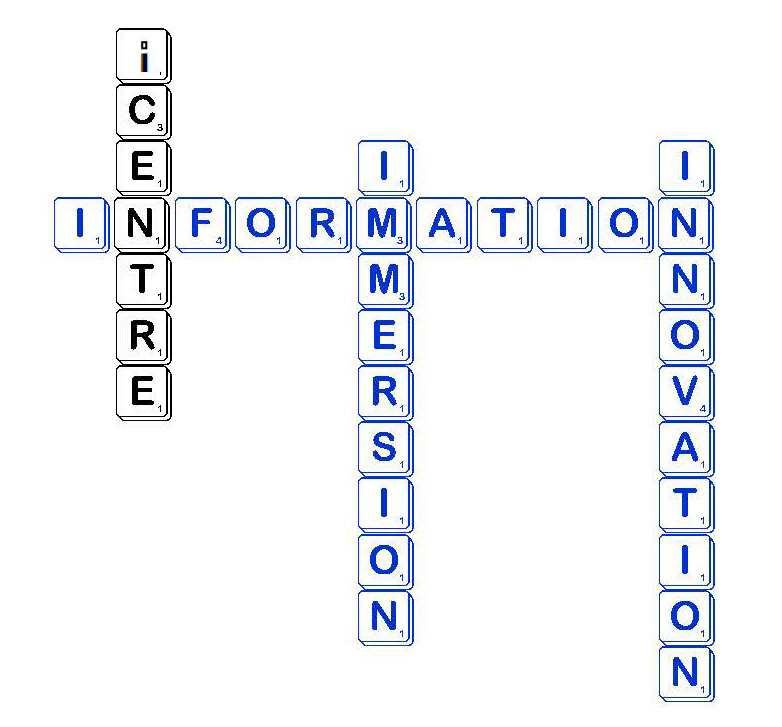
“The form the school library takes reflects the function” (Hay). Dr. Hay described the three “i’s” in the iCentre: information, immersion, and innovation. In the physical and virtual spaces of the library, school librarians teach individual learners as well as small groups and whole classes. They coteach with teachers to facilitate the iCentre’s information-technology convergence through the large flexible space and fluid design of the physical library.

If principals and architects bring a “bricks and mortar approach” to the library space redesign, it is essential that school librarians help them see the necessity of breaking out of traditional school library models. The role of the librarian should be of a leader who helps “fuse the work” of teaching and learning across the curriculum. School librarians must be key information, technology and learning leaders who combine their work with their colleagues’ efforts and reconcile various approaches to inquiry across the disciplines.

With a commitment to service, a core value of librarianship, school librarians can change library stakeholders’ expectations for their role. iCentre leaders can provide a strategic and operational framework for integrated learning that motivates and guides a whole school agenda. As such, the iCentre becomes an “innovation machine” in which students, teachers, specialists (including technology integrationists) see their roles blending and building in order to transform learning and teaching.

What impressed me most about Dr. Hay’s presentation was her focus on the adult learner leaders in the iCentre. Without the collaborative and innovative efforts of the schools’ adults, students will not have access to on-going transformative learning experiences. Check out Lyn Hay’s blog: Students Learning through School Libraries

Image created by Judi Moreillon in Microsoft Word with Scramble Font

Time for Collaboration Thanks

photo-1Up early to wrestle the turkey into the oven, and thought maybe a few of you might be doing the same!

Traditionally on Thanksgiving, we look forward to gathering with family and friends, and we celebrate those things for which we are thankful.   So this year, I have added some new reasons to be thankful, and, not surprisingly, they include recent opportunities for collaboration in my professional  life.

  • The collaboration blog experiment:

A little over a year ago, I was invited to have an adventure with three other library educators in launching a collaborative blog about collaboration.  The brainchild of Judi Moreillon, our mission was to share research, best practices, co-teaching ideas, and our own experiences about the many facets of collaboration in today’s schools.  Social media was our vehicle to reach pre-service and practicing teacher librarians everywhere to generate discussion and comment.  Along with Melissa Johnston and Sue Kimmel, we met virtually through a Google Hangout and through emails to organize a framework to publish our ideas on a rotating basis.  As far as Judi could determine, there was no other blog quite like this one, so it was an experiment. We are still going strong, and are learning as we go- with continual tweaking and reflection about improving content and delivery.  I have thoroughly enjoyed the experience and have appreciated a venue to share my voice on the art and science of collaboration and education that really resonate with me.

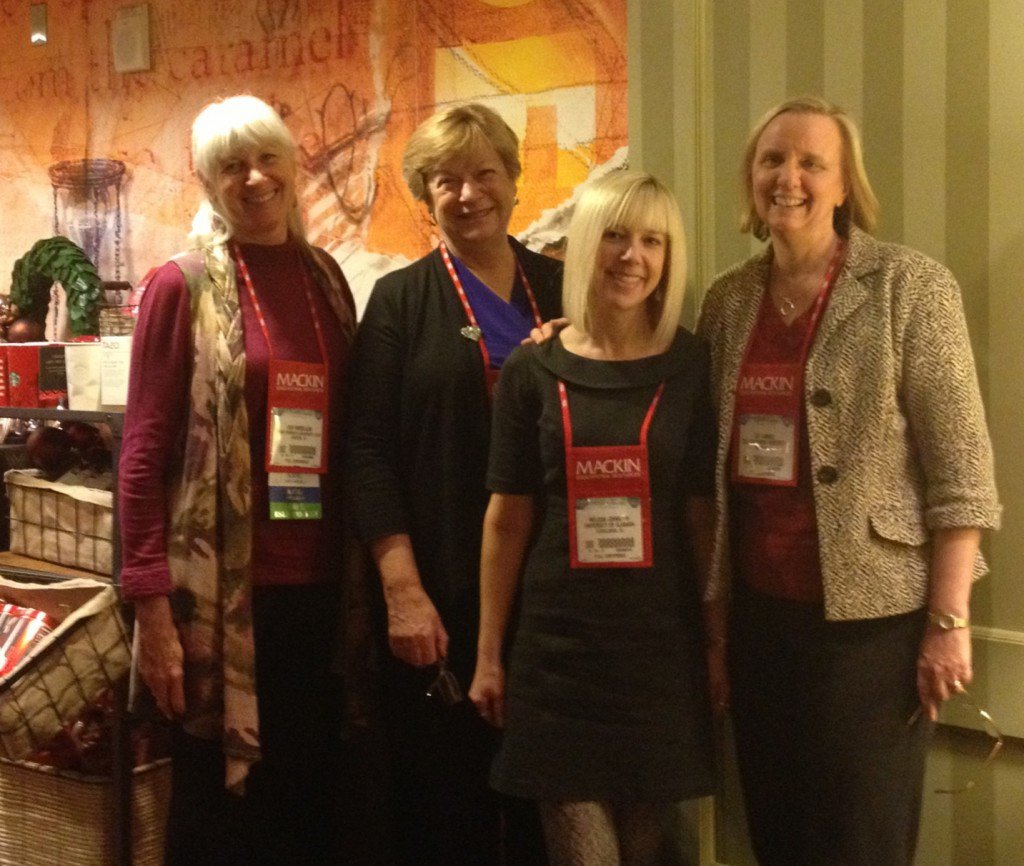
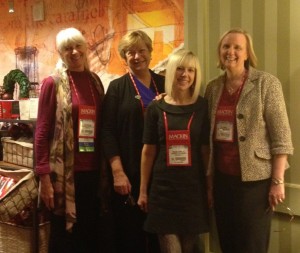
One of my highlights at the recent AASL Conference in Hartford, CT was the chance to get together with my blogging partners face to face.  I had met Sue at the AASL Fall Conference in 2012, but I had not met Judi or Melissa in person, only virtually.  It was a treat to have a “real” conversation with others in the profession who walk the walk, and talk the talk in higher education.  Each one of us has a unique lens and voice for examining aspects of collaboration that improve learning for our colleagues and our students.  I so admire how they can manage the spinning plates: teach courses, conduct research, write books and articles, speak at conferences, and of course-blog!   In the photo above you can see our smiles, as we enjoyed the moment-from the left, Judi, Judy, Melissa, and Sue- convening at Starbucks.  Thanks to all of you, and I look forward to continuing the adventure…

  •  Collaboration for advocacy:

In my posts earlier this fall, I shared the story about collaborative efforts for advocacy by the Vermont School Library Association.  When faced with a situation that required collective action to effect change,  our membership rallied to advocate for retaining language about school library staffing and programs in Vermont State Standards for education.  Currently, as the process is still unfolding, we have been successful in that effort, and expect that the end result will be increased visibility of the role of teacher librarians and commitment to school library programs in educational communities around the state.  I am so thankful for the close collaboration and relationships that have been forged in our work together.  Thank you Denise Wenz, President of VSLA, Heidi Huestis, Chair-Professional Concerns, Marty Reid, Vermont State Librarian, and Jill Remick, Project Director for Education Quality Standards, and many others,  too numerous to mention for all your hard work.

Final thoughts:

In spite of the challenges, it’s a wonderful time to be involved in education and teaching.  I’m thankful for the energy and inspiration that comes from working and collaborating with my friends in the field.  Kudos to you all for making a difference- today and tomorrow.  Happy Thanksgiving.

References:

Morris, Rebecca. (2003, Nov. 25). AASL wrap up. School Library Monthly. Weblog.  Retrieved from:  http://blog.schoollibrarymedia.com/index.php/2013/11/25/aasl-wrap-up/

Peterson, Karyn. (2013, Nov 21).  Vermont school librarians fight to keep libraries in state standards. School Library Journal. Weblog. Retrieved from:  http://www.slj.com/2013/11/schools/vermont-school-librarians-fight-to-keep-libraries-in-state-standards/#_

Photo: Melissa P. Johnston


Instructional Partnerships Deliver Success

wiki_logo_sizedThis is a special invitation to join us for a preconference workshop at the AASL National Convention next week in Hartford. Along with a team of school librarians and classroom teachers at each instructional level, I will be copresenting: Instructional Partnerships that Deliver Success: Meeting the Leadership Challenge. For a sneak peak, you can access our presentation wiki.

Our ½ -day workshop will be held on Thursday, November 14th from 8:30 to noon. As you can see from the agenda, we will share information and engage in conversations about how school librarians can enact successful instructional partnerships with classroom teachers. For one hour, the participants interact in instructional level groups and hear first-hand examples of effective strategies for working collaboratively with colleagues. We are delighted that classroom teachers will be joining us to provide first-person testimonials of their collaborative work with their school librarian.

Participants  will complete a puzzle that shows how inquiry learning and reading comprehension strategies align the work of school librarians as defined by AASL’s Standards for the 21st-Century Learner with the Common Core College and Career Readiness Standards. In addition, we will devote a half-hour slot to modeling and practicing close reading to help readers comprehend complex text.

And all along the way, we will have fun! Come learn with us because Instructional Partnerships (Do) Deliver Success. Together, we can rise up to meet the challenge! To find out about registering, go to the AASL Preconference Web page. If you have questions about our workshop, please post them here, or you can email me directly at: info@storytrail.com

I would also encourage you to visit the exhibit hall during the conference. In addition to vendors’ displays and presentations, you will find demonstrations in the AASL Booth related to various AASL resources. I would be remiss if I failed to mention our book Best of KQ: Instructional Partnerships: A Pathway to Leadership. Coeditor Susan Ballard and I will be signing in the AASL Booth #1131 on Saturday, November 16th from 9:30 to 10:00 a.m.

And please stop by the Eerdmans Books for Young Readers Booth #328 where I will be signing my new picture book Ready and Waiting for You.

See you in Hartford!

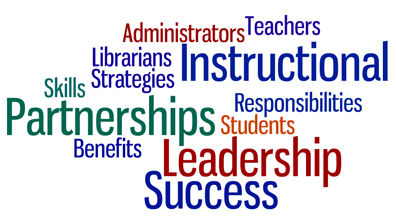
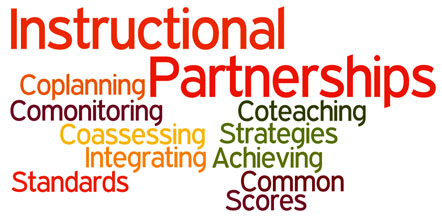
Word cloud created at Wordle.net

Coteaching Is the Answer…

jm_toondoo_sizedI subscribe to the Teaching Channel email blast. I especially appreciate the real-time video productions posted there, especially since I am no longer serving in a school and do not work with pre-K-12 teachers and librarians on a daily basis. This recently posted video shows an instructional coach working with a classroom teacher.

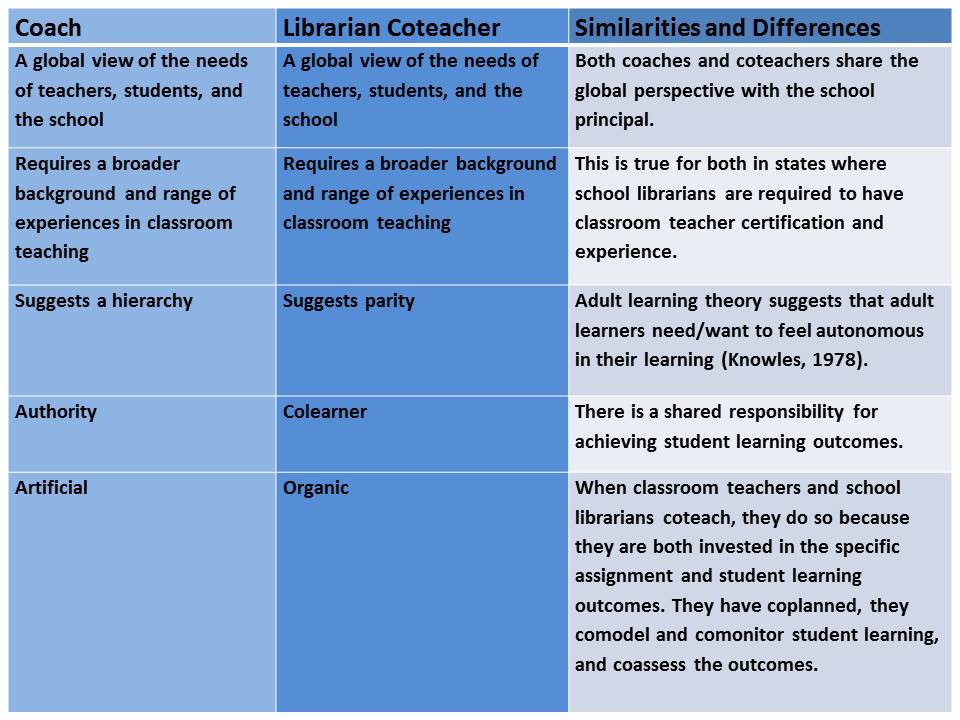
When I viewed this video, I thought of the differences between coaches and coteachers (as suggested in the chart in a previous post this week).

Although I don’t have a series of comparison videos for coteachers working with pre-K students, I do have a series of YouTube-hosted videos taken during a demonstration lesson for an undergraduate teacher preparation program course at Texas Woman’s University in Fall 2012. These videos show how classroom teacher-school librarian coteaching can be enacted through coplanning, comodeling, comonitoring, and coteaching.

I hope viewers will note the differences for the educators as well for the students. My experience, supported by research in the field, suggests that 21st-century school librarians who practice the instructional partner role are uniquely positioned to elevate teaching and positively impact learning in their schools.

A Word about the Cartoon: Several years ago when I served in my first high school library, I started a graphic novel collection. These books were NEVER on the shelves, particularly during lunch when the Anime/Manga Club met to read, talk, and draw. This illustration, inspired by this genre, was drawn by Becca, a founding member of that club. I’d like to think that my super-hero work as an instructional partner had a part in inspiring her artwork as well.

References

Cartoon created at ToonDoo.com
Illustration by Becca – Used with Permission
Moreillon, J., & Hall, R. N. (2013). LS3013: Classroom-Library Collaboration Videos. http://tinyurl.com/clcvideos
Teaching Channel. (2013). Value of Instructional Coaching. http://tinyurl.com/tcvalueic

Coteaching or Coaching: That is the question…

school-news-colorAccording to an article in the Daily Freeman, Kingston, New York spent $750K to hire five elementary and two middle school literacy coaches. When I read the article about how these coaches help facilitate literacy across the curriculum, motivate students through research centers, and provide job-embedded professional development to teachers, I wondered why school librarians aren’t being used in this capacity.

In the past ten years, while there has been a decline in the number of school librarians, there has been an increase in “coaching” positions such as instructional, literacy, reading, and technology coaches or integration specialists.

I served as a literacy coach for one year. I had been a successful coteacher as a school librarian prior to taking that position. I erroneously thought I could make a greater impact on instruction through an “authoritative” role; the teachers had to work with me. I returned to school librarianship the following year because, in my experience, coteaching was more effective than coaching, most notably in terms of the impact on adult learning—mine and that of my classroom teacher colleagues.

From where I sit on the “library team,” maximizing the school librarians’ impact through “coteaching” has several advantages over “coaching.”

coach_coteacher_table

What is your experience?

References

Hicks, M. A.. “School News.” Clip art licensed from the Clip Art Gallery on DiscoverySchool.com.

Knowles, M. (1978). The adult learner: A neglected species. (2nd ed.). Boston: Gulf.


STEM + Inquiry=Collaboration

00439573Sue Kimmel posted recently about finding ways to connect and collaborate with teachers using the Common Core Math Standards and literacy. This week I want to encourage reaching out to make connections around science initiatives, too, by looking at citizen science.

Citizen scientists ignite a passion for science and inquiry through participation in authentic projects that actively make a difference in scientific knowledge on large and small scales.  With the current emphasis on science, technology, engineering, and mathematics (STEM) in many school districts across the nation, the citizen scientist collaborative model for collective inquiry, gathering and analyzing data, and problem solving can be used to generate enthusiasm and curiosity in science classrooms.

Here is an opportunity for teacher librarians to become acquainted with the Common Core ELA Science Standards 6-12, and the Next Generation Science Standards, and to bring some fresh ideas and resources for developing curriculum units with other classroom teachers.

As an instructional partner, and co-teacher, we have to continue to build our teaching toolkit with pedagogy and content knowledge.  For students to become citizen scientists in their schools and communities, teacher librarians and teachers collaborate to design meaningful learning opportunities that engage curious minds, require action and reflection, and help solve real world problems.     Or, you could also get your students interested in a citizen science club that could have a physical and virtual presence in your library media center!

What is “citizen science?” you might ask.  How does technology play role in the collective capacity of amateur scientists all over the world, or in your own community? How can you develop a unit of study that replicates or enjoins some of the authentic work that is done by citizen scientists?

Here are a few ideas to get the ball rolling with both teachers and students:

Recommended reading:

  • Citizen Scientists by Loree Griffin Burns presents an approachable overview about the impact of citizen science for young people.  It’s a great introduction to some of the current projects around the world and shows how global citizenship is enhanced by making connections and contributions by individuals.  As an example of narrative non-fiction, is can also serve as a model for Common Core Reading and Writing Standards.

Edutopia website has a couple of related blog posts:

Youtube videos that present examples of authentic science inquiry:

  • “Digital Fishing on Citizen Science Cruise,” shares the educational program of the Crystal Cove Alliance in Newport Beach (CA) that immerses Students in the science of marine protected area management.http://www.youtube.com /watch?v=u6m2tqZMD3s
  • “Technology creates Citizen Scientists” relates the critical role that technology plays in allowing citizen scientists to help solve real world problems at local and global levels. http://www.youtube.com/watch?v=81hhecI0p5k

Websites:

  • “Scistarter: Science We Can Do Together” offers many projects and ideas for scientific inquiry and citizen scientists. http://www.scistarter.com/

Calling All Citizen Scientists!

I’m sure there are many opportunities in your local school and community for getting your student citizen scientists involved in helping to solve problems.  Catch the STEM wave that is a natural fit for your library program!


References:

Burns, Loree Griffin (2012). Citizen scientists. NY: Square Fish. http://us.macmillan.com/citizenscientists/LoreeGriffinBurns

Brunsell, Eric. (2010). A primer on citizen science.  Edutopia (2010, Oct.13). Weblog.  Retrieved from: http://www.edutopia.org/blog/citizen-science-eric-brunsell.  .

Common core Initiative: English Language Arts:  Science and Technical Standards (2011). Website.  Retrieved from: http://www.corestandards.org/ELA-Literacy/RST/9-10. .

Digital fishing on citizen science cruise. (2012, Sep. 25)  Newport Beach, CA: Crystal Cove Alliance. Video.  Retrieved from: http://www.youtube.com/watch?v=u6m2tqZMD3s.

Next Generation Science Standards. (2013). Website.  Retrieved from: http://www.nextgenscience.org/.

Phillips, Mark. (2013, April 17). Teaching and the environmental crisis: resources and models. Edutopia . Weblog.  Retrieved from: http://www.edutopia.org/blog/teaching-environmental-crisis-resources-models-mark-phillips.

Scientific American: Citizen Science. Website.  Retrieved from:  http://www.scientificamerican.com/citizen-science/.

Scistarter. Website.  Retrieved from: http://www.scistarter.com/.

Technology creates Citizen Scientists. (2012, Aug. 16) California Academy of Science.  Video.  Retrieved from: http://www.youtube.com/watch?v=81hhecI0p5k.

This thing called science part 6: Citizen science.  (2013, May 23). TechNyouvids. Video.  Retrieved from: http://www.youtube.com/watch?v=N6eN3Pll4U8.

Microsift clipart.


COMMON sCOREs: Instructional Partnerships that Deliver Success

Common_Scores_logo_sizedIn 2011, Maria Cahill, Rebecca McKee, and I conducted a study of state-level librarian conferences. Our research questions centered on the professional development focused on each of the five roles of school librarians offered at these conferences. We conducted a content analysis and reviewed the data in several conference categories and we looked at the data across all conferences as well.

We learned that the instructional partner role of school librarians is the least represented in state-level conference sessions. (You can read the complete study report in School Library Research.)

Does that mean that school librarians are not consistently practicing this role? Or are we not submitting conference session proposals that spotlight our instructional partnerships? Or are conference planners not selecting instructional partnership sessions from among those proposed?

For whatever reason, many of us believe it is essential to counteract this trend. Some in the school librarian profession are renewing our commitment to presenting workshops and conference sessions focused on the benefits to students and educators of classroom-library collaboration for instruction.

I am a member of a team of school librarians and classroom teachers who will share our instructional partnership experiences at the upcoming American Library Association (ALA) conference in Chicago later this month. Judi Paradis and her teaching partner first-grade teacher Marianne Duffy will represent the elementary school perspective. Sabrina Carnesi and her teaching partner Naadira Mubarak will share their collaborative work at the middle school level. Stacy Cameron and I will share our high school examples.

Here’s a description of our preconference:
What is the core of 21st-century school librarianship? How does OUR core relate to the Common Core State Standards and other state standards? What are the skills, dispositions, responsibilities, and self-assessments we can apply to co-achieve uncommon success? This preconference will provide strategies for demonstrating the school librarian’s central role in the academic program through practicing instructional partnerships to ensure success for K-12 students, teachers, administrators, librarians, and for the school librarian profession, too.

If you are headed to Chicago to attend the ALA Annual Conference, I hope you will consider attending our preconference workshop. It will be held on Friday, June 28th from 8:30 a.m. to noon. For more information about all of the preconference workshop offered at the conference this year, visit the AASL Web site.

See you in Chicago.

Work Cited

Moreillon, Judi, Maria Cahill, and Rebecca McKee. State Library Conferences as Professional Development Venues: Unbalanced Support for the AASL-defined Roles of the School Librarian. School Library Research 15. 29 July 2012. Web. 06 June 2013 <http://www.ala.org/aasl/slr/volume15/moreillon-cahill-mckee>.

Word Cloud created at Wordle.net


Best of KQ: Instructional Partnerships

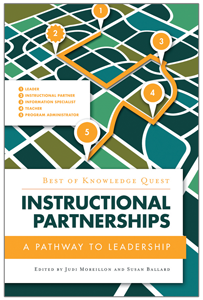
Best_of_KQ_IPsAlong with AASL President Susan Ballard, I co-edited the just-released Best of KQ: Instructional Partnerships: A Pathway to Leadership. Susan and I had the opportunity to select outstanding articles written by scholars, researchers, and practitioners in the field. Gleaned from more than a decade of issues of Knowledge Quest, the journal of the American Association of School Librarians (AASL), this book attests to the fact that the call to serve in the instructional partner role is not new AND it is timely!

Check out the press release on the ALA Web site.

In the changing landscape of 21st-century education, this role may be more imperative than ever. Whether your school is in the process of “reforming” or “transforming” the academic program (see Judy Kaplan’s May 28th post), it is essential that school librarians are fully engaged and yes, lead, in these efforts. The Best of KQ: Instructional Partnerships is organized in three categories: instructional partnerships in the broad context, research related to instructional partnerships, and classroom-library instructional partnership in action. The authors of the articles in the book provide a framework, research evidence, and examples from their own practice to help school library colleagues take the lead. Kudos to all of you!

Implementing instructional partnerships is not easy. It requires many of the “habits of mind” (Costa and Kallick) expected of 21st-century learners including flexibility, persistence, practicing critical thinking, reflection, and metacognition, and above all, continuous learning. If educators expect P-12 students to achieve these dispositions and practice these behaviors, then it behooves us to model these for them. Creating, developing, and sustaining instructional partnerships with colleagues is one way to do just that.

AASL has made the “Coteaching” Webinar that Susan and I hosted in March 2012 freely available on the Web for thirty days. Several authors from the KQ 40.4 “Coteaching” issue shared their experiences during the Webinar; some of their articles were reproduced in this Best of KQ: Instructional Partnerships monograph.

Works Cited

Costa, Arthur L. and Kallick, Bena. (Eds). Learning and Leading with Habits of Mind: 16 Essential Characteristics for Success. Alexandria, VA: Association for Supervision and Curriculum Development, 2008. Print.

Moreillon, Judi, and Susan Ballard. (Eds.) The Best of KQ: Instructional Partnerships: A Pathway to Leadership. Chicago: American Association of School Librarians, 2013. Print.