Reaching Across the Blogosphere

handreachThere was a discussion this week on the AASL Forum regarding an Edudemic blog post “10 Ways to Promote Your Classroom Library” by educator Jeff Dunn.  Librarian Paige Jaeger posted a response “Building Bridges: Collection to Classroom” on her Library Door blog and launched the Forum conversation.

This exchange prompted me to think about how classroom teachers and school librarians often travel in different social media and professional development worlds. Reaching across the blogosphere is especially critical for school librarians simply because there are fewer of us and our collective voices simply cannot make as large an impact as those of classroom teachers.

In the spirit of reaching out, I emailed Jeff and copied the AASL Forum list. I hope classroom teachers and school librarians will break down some of the silos in the blogosphere and share information and ideas that further build collaboration among educators. The following is my email to Jeff:

Dear Jeff Dunn,

Your post about classroom libraries prompted a discussion on a listserv forum for the American Association of School Librarians. Thank you!

I appreciate your thoughtful ideas about promoting literature in the classroom and hope that in schools across the country school librarians are also using all of these strategies (and more) to promote reading in their schools.

In his book Around the Reading Workshop in 180 Days, Frank Serafini notes that at least 100 books per child is the benchmark of a well-stocked classroom library (37). He recommends 2,500 – 3,000 resources at all reading levels in all genres.

Wow! I don’t know many teachers who have the financial resources or the physical space to provide that amount of reading material in their classrooms for their students.

However, a well-stocked school library facilitated by an effective school librarian can meet students’ and teachers’ resource needs. School librarians – along with classroom teachers – can contribute to developing the exciting strategies for engaging students with literature and learning that you propose.

Yes! to classroom libraries! Yes! Yes! to school libraries. Yes! Yes! Yes! to classroom teachers and school librarians who collaborate to help youth access fresh and exciting reading material and develop the skills and strategies they need to become lifelong readers and learners.

Sincerely,
Judi

References

Hand Reach Photo by Pennywise from Morguefile.com

Serafini, Frank. 2006. Around the Reading Workshop in 180 Days: A Month-by-Month Guide to Effective Instruction. Portsmouth, NH: Heinemann.
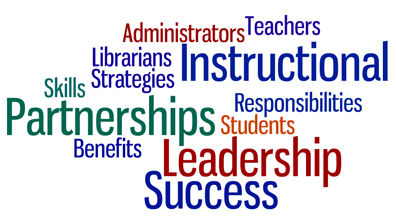


Instructional Partnerships Deliver Success

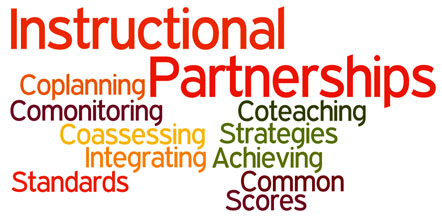
wiki_logo_sizedThis is a special invitation to join us for a preconference workshop at the AASL National Convention next week in Hartford. Along with a team of school librarians and classroom teachers at each instructional level, I will be copresenting: Instructional Partnerships that Deliver Success: Meeting the Leadership Challenge. For a sneak peak, you can access our presentation wiki.

Our ½ -day workshop will be held on Thursday, November 14th from 8:30 to noon. As you can see from the agenda, we will share information and engage in conversations about how school librarians can enact successful instructional partnerships with classroom teachers. For one hour, the participants interact in instructional level groups and hear first-hand examples of effective strategies for working collaboratively with colleagues. We are delighted that classroom teachers will be joining us to provide first-person testimonials of their collaborative work with their school librarian.

Participants  will complete a puzzle that shows how inquiry learning and reading comprehension strategies align the work of school librarians as defined by AASL’s Standards for the 21st-Century Learner with the Common Core College and Career Readiness Standards. In addition, we will devote a half-hour slot to modeling and practicing close reading to help readers comprehend complex text.

And all along the way, we will have fun! Come learn with us because Instructional Partnerships (Do) Deliver Success. Together, we can rise up to meet the challenge! To find out about registering, go to the AASL Preconference Web page. If you have questions about our workshop, please post them here, or you can email me directly at: info@storytrail.com

I would also encourage you to visit the exhibit hall during the conference. In addition to vendors’ displays and presentations, you will find demonstrations in the AASL Booth related to various AASL resources. I would be remiss if I failed to mention our book Best of KQ: Instructional Partnerships: A Pathway to Leadership. Coeditor Susan Ballard and I will be signing in the AASL Booth #1131 on Saturday, November 16th from 9:30 to 10:00 a.m.

And please stop by the Eerdmans Books for Young Readers Booth #328 where I will be signing my new picture book Ready and Waiting for You.

See you in Hartford!

Word cloud created at Wordle.net

Rising to the Challenge

aasl13_presenterThe 16th National American Association of School Librarians Conference is coming to Hartford, Connecticut from November 14th – 17th. This biennial conference offers a gold mine of professional development opportunities for those lucky enough to attend. For school librarians serving in states where the school librarian division is only a part of their state conference, this conference devoted solely to the work and needs of school librarians may be particularly valuable.

“Rising to the Challenge” is an apt theme for this conference. Across the nation, school librarians are being asked to step up in many different ways. Demonstrating and documenting our contributions to student learning outcomes is a huge part of our challenge in 2013. In states that have adopted the Common Core State Standards or are rolling out other curriculum initiatives, school librarians are working together to determine their place in helping students and teachers succeed.

The one book, one conference title is 18 Minutes: Find Your Focus, Master Distraction, and Get the Right Things Done by Peter Bregman. Mr. Bregman will speak at the closing session on Saturday.

You can access information about the preconference workshops (Registration is still open), concurrent sessions, and special events on the AASL conference Web site.

Whether or not you are able to attend in person, you can join the conference Ning. You can also choose to follow the conference via social media. The Twitter hashtag is #aasl13.

There are so many ways to connect, learn, and network. “See” you there!

School Librarians Help Build a Capacity for Collaboration

CCC_aasl_ncle_sizedLast week, the American Association of School Librarians (AASL) published an infographic that summarizes some of the findings from the “NCLE Report: Remodeling Literacy Learning.” We reported on a few highlights of the study in an April 2013 post. See “School Structures that Support Collaborative Cultures.”

AASL’s new infographic “Working Together is Working Smarter” spotlights the various ways in which school librarians support a collective capacity for collaboration in their schools. Through librarians’ work with “internal collaborative teams,” individuals and groups of students and teachers receive support for teaching and learning. Three specific ways are highlighted on the graphic:

  1. Helping individual teachers and students locate resources.
  2. Participating in collaborative planning that focuses on accessing, evaluating, and applying information.
  3. Leading professional development for staff and educators (AASL).

The infographic goes on to share some of the ways schools librarians practice continuous learning in order to improve their leadership abilities. School librarians might consider linking this document to the library homepage or posting it on the library bulletin board or in school library office if colleagues will see it there. This infographic could also be a very fine welcome back to school gift for administrators who may need to be reminded of the central role school librarians can play in helping build a collective capacity for collaboration.

Work Cited

American Association of School Librarians. “Working Together Is Working Smarter.” ALA.org. N.p., n.d. Web. 6 Aug. 2013. <http://tinyurl.com/aaslncleinfographic>.


Building a Culture of “All In!!!”

Yesterday at the AASL President’s Program speaker 2013 AASA National Superintendent of the Year Mark A. Edwards from Mooresville (NC) Graded School District spoke eloquently on the role that school culture and vision play in his district’s successful technology “conversion.”  While he described the investment Mooresville is making by leasing computers for every student, faculty, and staff member in the district, he focused on the idea of “all in!!!” as much or more than the tools themselves.

Although I have not yet read his book, Every Child, Every Day: A Digital Conversion Model for Student Achievement, Dr. Edwards clearly outlined a school culture context in which everyone is invested in and committed to providing students with the most engaging, collaborative, real-world learning experiences that lead to student (and educator) success.

Dr. Edwards talked about six ingredients in the Mooresville initiative. It was compelling to note that only two of them were directly related to technology: 21st-century tools and rich and intensive data used by students, teachers, and parents to guide and monitor learning.

The other four ingredients were: building the culture, building capacity through ongoing professional development, “all in!!!,” and ubiquitous leadership. (It is no surprise that Dr. Edwards is now writing a book about distributive leadership.) What should strike all educators, and maybe school librarians in particular, is that everyone has a leadership role in this model, which supports the culture of collaboration in the school.

Said Dr. Edwards: “Every school librarian in Mooresville represents leadership that is central to successful student learning.”

Thank you for an excellent talk, Dr. Edwards, and for spreading your vision far and wide across the country. You have the eyes and ears of other educational leaders. We look forward to hearing more about the success in Mooresville.


COMMON sCOREs: Instructional Partnerships that Deliver Success

Common_Scores_logo_sizedIn 2011, Maria Cahill, Rebecca McKee, and I conducted a study of state-level librarian conferences. Our research questions centered on the professional development focused on each of the five roles of school librarians offered at these conferences. We conducted a content analysis and reviewed the data in several conference categories and we looked at the data across all conferences as well.

We learned that the instructional partner role of school librarians is the least represented in state-level conference sessions. (You can read the complete study report in School Library Research.)

Does that mean that school librarians are not consistently practicing this role? Or are we not submitting conference session proposals that spotlight our instructional partnerships? Or are conference planners not selecting instructional partnership sessions from among those proposed?

For whatever reason, many of us believe it is essential to counteract this trend. Some in the school librarian profession are renewing our commitment to presenting workshops and conference sessions focused on the benefits to students and educators of classroom-library collaboration for instruction.

I am a member of a team of school librarians and classroom teachers who will share our instructional partnership experiences at the upcoming American Library Association (ALA) conference in Chicago later this month. Judi Paradis and her teaching partner first-grade teacher Marianne Duffy will represent the elementary school perspective. Sabrina Carnesi and her teaching partner Naadira Mubarak will share their collaborative work at the middle school level. Stacy Cameron and I will share our high school examples.

Here’s a description of our preconference:
What is the core of 21st-century school librarianship? How does OUR core relate to the Common Core State Standards and other state standards? What are the skills, dispositions, responsibilities, and self-assessments we can apply to co-achieve uncommon success? This preconference will provide strategies for demonstrating the school librarian’s central role in the academic program through practicing instructional partnerships to ensure success for K-12 students, teachers, administrators, librarians, and for the school librarian profession, too.

If you are headed to Chicago to attend the ALA Annual Conference, I hope you will consider attending our preconference workshop. It will be held on Friday, June 28th from 8:30 a.m. to noon. For more information about all of the preconference workshop offered at the conference this year, visit the AASL Web site.

See you in Chicago.

Work Cited

Moreillon, Judi, Maria Cahill, and Rebecca McKee. State Library Conferences as Professional Development Venues: Unbalanced Support for the AASL-defined Roles of the School Librarian. School Library Research 15. 29 July 2012. Web. 06 June 2013 <http://www.ala.org/aasl/slr/volume15/moreillon-cahill-mckee>.

Word Cloud created at Wordle.net


Collaboration and Mentoring-Take 2

Be the change you wish to see in the world…

Mohandas Gandhi

Barbara Stripling, President Elect of ALA, was the keynote speaker at a recent Massachusetts School Library Association Conference (March 2- 4, 2013). As a mentor, she encouraged those attending to “be the change,”  to make a difference by changing  one life at a time, and helping students raise their own dreams, skills, and dispositions of inquiry. Weaving the themes of collaborative relationships, decision making, and problem solving, she shared a vision of a vibrant model for student centered learning in 21st Century schools.  Her passion and commitment to the field of librarianship and education is both inspirational and challenging. How can we live up to this ideal?  I guess we just have to work harder at what we do best, so that we can be the change, too.

Two colleagues and I traveled from Vermont to Sturbridge, Massachusetts to participate in a three day event that allowed us to rub shoulders with Barbara Stripling, Richard Byrne, Pam Berger, and a host of authors, including Jack Gantos.  We were excited to meet and talk to our compatriots from another New England state to compare notes about school library issues.  We were also meeting some of our Twitter friends for the first time face to face.  Sitting in a large conference room, it was amusing to overhear people saying, “So there you are!  It’s so wonderful to meet you in person after getting to know you through your blog or Twitter.”  Having a chance to sit down and chat with the presenters between sessions, or during lunch and dinner provided a personal experience that you don’t have every day.

As in other sections of the country, in New England and the Northeast, there are opportunities within reasonable driving distances for collaboration and mentoring at regional/state school library conferences and meetings.  Many teacher librarians can’t afford to go to national conferences very often, or at all.  Some have no financial support from their districts for professional development other that what is provided at the local level.  State professional organizations play an important role in bringing national speakers and showcasing best practices within the field to a gathering of folks who come to share ideas, connections, and to make or renew friendships.   PLNs now put practitioners in touch with others throughout the nation, and also provide connections within a geographical area, too.  Social media and Twitter feeds allow everyone to communicate and collaborate across time and space.  There are so many different ways to mentor and be mentored, in our fast paced world, but face to face collaboration is still a very powerful way to connect the dots.

Having returned from the conference with many new ideas and new relationships, I am already putting plans into action that will affect my teaching and learning.  Coincidentally, once again, the current issue of Knowledge Quest : Mentoring Through Partnerships continues to look at collaboration, and the role of professional organizations is seen as a venue for mentoring.   Melissa Johnston shares her conclusions from some research about technology leadership in Knowledge Quest  (2013, 38), “Not only do professional organizations provide support for school librarians through relationships with other school librarians, but this research finds that professional growth opportunities from  professional organization activities such as conferences and publications serve as enablers as well.”  From my own experience, I can’t agree more!  And as a final note, when I was doing a school visit last week, I went into the school library, and there  inscribed on the wall was a familiar message: Be the change you wish to see in the world.  I felt as if I had come full circle.


Barbara Stripling elected ALA president (2011). School Library Journal (May 4, 2012) http://www.schoollibraryjournal.com/slj/home/894466-312/barbara_stripling_elected_ala_president.html.csp

Johnston, M.P. (2013). The importance of professional organizations and mentoring for leadership. Knowledge Quest 41(4). http://www.ala.org/aasl/knowledgequest

Massachusetts School Library Association Conference: Lead & Learn (2013).  http://maschoolibraries.org/content/view/1046/704/

Reeling in the Reluctant Fish

Several weeks ago, Sue Kimmel blogged about working with reluctant teachers, the ones who are not coming to the collaboration table.  She offered some ideas for making sure that students in those classrooms still had school library learning opportunities in different settings.  I would like to explore ways to reel some of those reluctant fish into collaborative relationships.

First, cast the line with some intriguing bait:

From my experience, many teachers who are reluctant collaborators are often leery of new ideas or trends.  They may not want to jump on the latest bandwagon, or to take a risk in looking foolish in front of colleagues or students.  Mostly, they like to play it safe, not venture into the unknown.  Respect that view, be generous, and don’t give up.  Cultivate a person to person relationship.  Watch, listen, and ask probing, but friendly questions about what’s happening in their classrooms.  Tease out the challenges that they have encountered around curriculum units, or student engagement.  Ask to visit or help out in the classroom.  Listen to students who come in from those classes with projects that have been assigned.  Get the big picture, and just wait.

Get acquainted with any school reform initiatives, or curriculum revisions that might impact that teacher.  Implementation of Common Core Standards and the new testing format are certainly hot topics right now.  Be part of that conversation, and immerse yourself in the documents, so that you understand the implications for the educational community. Embrace emerging technologies. Have some hotlinks in your PLN for other standards, too-AASL, ISTE, and so on.

Gather up a few “lures,” such as online resources, web 2.0 apps, blogs, rss feeds, and best practices in pedagogy and brain-based learning.  Fill your tackle box with information about Universal Design for Learning, flipped classroom, backward design, differentiated instruction, inquiry based learning, and so on.

Be ready with one small lure to offer that reluctant teacher, when you have the conversation that opens an opportunity to take the first step.

I know, I know… you don’t have time or patience to wait for that fish to bite, but as long as you have the line out, and the fish is circling, you may get a big one in the end!

Caught one!

In years past, I had a fish, oops, I mean colleague, who was in a self-contained classroom, and I tried to extend a collaborative hand without a lot of success.  Then, the administration required every teacher to collaborate in a team to develop and co-teach a standards based unit.  Since this person was not part of a team, she had to team up with someone.  Guess who she chose?  Needless to say, it was the beginning of a creative and stimulating collaboration that benefited both of us and the students in her classroom.  Our collaboration continued to grow throughout the years, and we had so much fun! (BTW-that’s not me in the photo.  All photos from Microsoft Clipart)

More hooks:

Looking for other entry points for collaboration?  Be sure to check out the Teacher Resource pages within Debbie Abilock’s fabulous NoodleTools website.  There are wonderful ideas and links to web tools and resources.  Every school needs to have this resource for information literacy.  Some of the material is gratis, but the advanced product is well worth the cost.

Resources:

NoodleTools Curriculum Collaboration Toolkit.  NoodleTools, 2007. Web. 25 Feb. 2013. <http://www.noodltools.com/debbie/abilock/collab/.>


Leadership in Technology Integration

As many know, Wednesday, February 6, 2013 is the second annual Digital Learning Day. Educators from around the country will be sharing and celebrating effective strategies for integrating technology tools into 21st-century learning and teaching.

In light of this national conversation, I would like to recommend a research article by our co-blogger Melissa P. Johnston: “School Librarians as Technology Integration Leaders: Enablers and Barriers to Leadership Enactment.”

In the conclusion of her study report, Dr. Johnston summarizes the enablers and the barriers to technology integration identified by the participants in her study who were teacher leaders and school librarians:

Enablers for all participants:

  • supportive principal,
  • opportunities for a leadership role and responsibilities,
  • the desire to make a difference for students and teachers,
  • professional development opportunities,
  • and a sense of obligation to get involved.

Barriers:

  • time,
  • exclusion from a leadership role and responsibilities,
  • lack of funding,
  • and inadequate staffing.

Enablers unique to school librarians included:

  • support from professional organizations,
  • support from district library administrators,
  • serving in a dual role as school librarian and technology specialist,
  • and technology expertise.

Barriers identified by school librarians included:

  • competitive relationships with instructional technologists,
  • lack of support at the district level from a library administrator,
  • and lack of technology expertise (Johnston, 2012, p. 27).

In light of this research, educators can use Digital Learning Day to rededicate ourselves to working collaboratively with each other and with professional organizations to create dynamic learning opportunities for students that effectively integrate 21st-century tools. Let’s break down the barriers and shore up the enablers for the benefit of learners!

References

Johnston, M. P. (2012). School librarians as technology integration leaders: Enablers and barriers to leadership enactment. School Library Research, 15(1). Retrieved from www.ala.org/aasl/slr.

Word Cloud created at Tagxedo.com

PLNs=Connections=Collaboration=Happy Teacher Librarians

Once again, I am always amazed at coincidences that happen from day to day.  In the final module for the professional development course I am facilitating this semester at UVM, we are focusing on literacy leadership and advocacy.  Part of the required reading and discussion has centered on developing PLNs for professional practice.  For teacher librarians in the field, PLNs are critical for keeping current and for communication and collaboration, and they also provide opportunities for advocacy.

Personal Learning Networks are lifelines for staying connected in this wild Web 2.0 world.  Establishing a PLN enhances professional development, lifelong learning, and opportunities for collaboration, locally, nationally, and globally.  It’s especially important for those of us in the profession who are sole practitioners in a building, or even serving multiple schools in a whole district. A PLN has potential as a support system for anyone who wants to reach out and converse and collaborate with other folks who have similar interests and challenges, and may have different views to share.

Getting back to the coincidence I mentioned, as I was polishing off the module and preparing to post it to the Blackboard site, the mailman delivered the November/December 2012 issue of Knowledge Quest. To my very pleasant surprise, the theme for the issue was “Personal Learning Networks.”  I quickly added it as a resource for the module, and what a resource it is!

Not only does the print issue offer a range of articles that cover a variety of possible advantages of using PLNs in professional practice, but the links on the AASL website provide lots of other resources to explore.  If you are a member of AASL (another reason to join), you have access to the print and online editions of the publication, support materials, webinars, and social networking sites.  If you don’t belong, you can still have access to many of the resources online.

To get started here are some recommended highlights from the Knowledge Quest website: http://www.ala.org/aasl/aaslpubsandjournals/knowledgequest/archive/v41no2

  • Table of Contents: Check out the awesome articles in the print edition. There is a direct link for AASL members for the online edition, or if you have access to online databases through your school or public library, you can find KQ articles indexed in several of them.  They are a gold mine.
  • KQ Webinar-coming soon: “Making the Most of Professional Learning Communities” Tuesday December 12, 2012 at 7:00 PM EST.
  • 30 Second Thought Leadership: Jennifer LaGarde and Liza Perez. “What makes personal learning networks critical for professional development?”

And coincidentally, if you have not jumped in and set up a site for curating your favorite websites, blogs, nings, twitter and rss feeds, and so on, as Jennifer LaGarde says, “What are you waiting for?”


Resources:

“Personal Learning Networks”, American Library Association, November 14, 2012. http://www.ala.org/aasl/aaslpubsandjournals/knowledgequest/archive/v41no2 (Accessed November 25, 2012)

“30 Second Thought Leadership”, American Library Association, February 21, 2012. http://www.ala.org/aasl/aaslpubsandjournals/knowledgequest/aboutkq/30second (Accessed November 25, 2012)