Red Wagon Redux

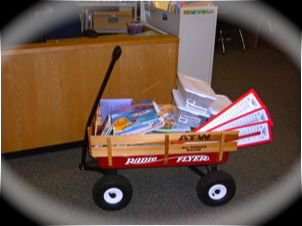
red-wagon-y65njlReading Judi’s recent entry as well as the conversation on the AASL Forum about classroom collections, I decided it was time to revisit the red wagon I talked about in earlier postings. Someone once commented to me that the red wagon never went to a classroom when it wasn’t full. And this was true – the red wagon was a way for me to provide classrooms with “revolving collections” of materials that I knew would appeal to students as well as match the current curriculum goals in science or social studies for example.  Many of my teachers had extensive classroom collections that they had amassed over the years. Their collections became wallpaper in the classroom and needed to be re-freshed. The library was the way to do this.

As I think about Judi’s post and the important point she makes about needing to come out of our silos and talk to each other, I think we need to see the desire for a classroom collection as a way for us to bridge the library and the classroom.  Those teachers who have extensive classroom collections are often strong library allies.  They collect books because they love them and they believe in putting books in the hands of kids.  They have a bottomless need for books and reading and the library is their fix.

One of the best methods I observed for promoting reading in the classroom were genre baskets that changed regularly.  One teacher I worked with submitted a new “red wagon request” every month to re-fresh her baskets with a variety of fiction genres, non-fiction, biography, and special formats like magazines or graphic novels.

I have to admit, I always got concerned when teachers asked for money from the budget to supply classroom collections. I had a principal who understood that scarce budgetary resources were best allocated to shared resources such as the library.  One enterprising teacher, however, found a grant to purchase tubs and relatively inexpensive paperback book sets from a major publisher for every classroom. These tubs were also checked out from the library at the beginning of the year and returned at the end.  A cursory inventory was done of each tub. Some loss was inevitable but we were able to add to these tubs with donations of paperbacks or duplicates that weren’t needed in the library collection.

I really appreciated the tone of Judi’s letter and think this open stance is our best approach to this issue. School librarians, teachers and principals want the same thing for our students when it comes to learning to read both critically and for sheer enjoyment. We want them to have access to a variety of appealing, quality materials. The materials in those tubs were pale compared with library books.

Red Wagon Redux

red-wagon-y65njlReading Judi’s recent entry as well as the conversation on the AASL Forum about classroom collections, I decided it was time to revisit the red wagon I talked about in earlier postings. Someone once commented to me that the red wagon never went to a classroom when it wasn’t full. And this was true – the red wagon was a way for me to provide classrooms with “revolving collections” of materials that I knew would appeal to students as well as match the current curriculum goals in science or social studies for example.  Many of my teachers had extensive classroom collections that they had amassed over the years. Their collections became wallpaper in the classroom and needed to be re-freshed. The library was the way to do this.

As I think about Judi’s post and the important point she makes about needing to come out of our silos and talk to each other, I think we need to see the desire for a classroom collection as a way for us to bridge the library and the classroom.  Those teachers who have extensive classroom collections are often strong library allies.  They collect books because they love them and they believe in putting books in the hands of kids.  They have a bottomless need for books and reading and the library is their fix.

One of the best methods I observed for promoting reading in the classroom were genre baskets that changed regularly.  One teacher I worked with submitted a new “red wagon request” every month to re-fresh her baskets with a variety of fiction genres, non-fiction, biography, and special formats like magazines or graphic novels.

I have to admit, I always got concerned when teachers asked for money from the budget to supply classroom collections. I had a principal who understood that scarce budgetary resources were best allocated to shared resources such as the library.  One enterprising teacher, however, found a grant to purchase tubs and relatively inexpensive paperback book sets from a major publisher for every classroom. These tubs were also checked out from the library at the beginning of the year and returned at the end.  A cursory inventory was done of each tub. Some loss was inevitable but we were able to add to these tubs with donations of paperbacks or duplicates that weren’t needed in the library collection.

I really appreciated the tone of Judi’s letter and think this open stance is our best approach to this issue. School librarians, teachers and principals want the same thing for our students when it comes to learning to read both critically and for sheer enjoyment. We want them to have access to a variety of appealing, quality materials. The materials in those tubs were pale compared with library books.
Assessment Toolbox

toolbox-md

What’s in your assessment toolbox?  As a collaborating co-teacher, or instructor in your own library classroom, you need a variety of assessment tools that measure critical thinking and comprehension, as well as knowledge and performance.  So many assessments, so many choices-how do you pick the right one? Formative and summative assessments range from simple to complex, and depend on the goals for the activity or unit and the age/level of the student.  Good assessment tools inform the teacher and the student about progress.  Teaching and learning can be adjusted according to results of assessments. They are  essential elements for effective instruction.  So with that said, do you have some favorite ways to evaluate learning?  Would you like to find new ideas that are quick and easy?  What are some technology apps that bring a creative twist to the tried and true?

Here are a few links to explore that might give you some new tools for your toolbox:

Jennifer LaGarde’s  “Adventures of Library Girl” blog (Dec. 3, 2012) has a compendium of digital tools for using for assessment: http://www.librarygirl.net/2012/12/library-girls-picks-best-digital-tools.html

Kathy Schrock’s website-not to be missed-many examples of rubric and assessments: http://www.schrockguide.net/assessment-and-rubrics.html

West Virginia Department of Education website, page on formative assessment: http://wvde.state.wv.us/teach21/ExamplesofFormativeAssessment.html

Do you have other suggestions to add to the list?  Share them here!

(Image: clkr.com)


Collaboration and Assessment

fair use fairy school A rubric that includes a cartwheel, scented paper, and handout dances? How does that measure learning about hot topic issues in school librarianship?  Why can’t assessment have a sense of fun and play?  See it here!

The end of the semester is a busy time in higher ed, but exams, projects, and reflections in coursework give instructors a chance to assess and celebrate student learning. Best educational practice and strategies for teaching may vary according to the developmental age of the students and by content, but a major goal in any classroom is to engage and excite learners. The question is how do you as an instructor recognize and honor learning?

Assessing student learning has not been a focus for teacher librarians in the past, but when new standards and collaboration enter the picture, TLs have to step up and be part of that process.

Learning about assessment through authentic examples embedded within a graduate course demonstrates possible techniques for creating assessments that inform both students and instructors about knowledge and performance.

Recently, my co-instructor and I here at the University of Vermont met with students face to face for the final class this semester.  The course is offered in a blended format, two face to face classes at the beginning and end of the semester, five videoconferencing sessions at various times, and Blackboard modules that support online communication and work.  The course, Management of School Library Media Centers, is an overview of the various administrative and leadership roles of the teacher librarian in the school environment.  Sounds dry, doesn’t it?  There are many projects and ways that students are assessed and self assess during the course.  Reflection through personal blogs is a major expectation. Written reports, and evidence of leadership and collaboration are also part of assessment. Technology is infused throughout, and students are encouraged to stretch themselves out of their comfort zone. Feedback is ongoing between instructors and students.  It’s a huge amount of work for both!

So, here we are wrapping up our time together by sharing the fruits of a semester long project that requires students to choose a hot topic of interest, find a group of like minded folks, collaborate across time and space to identify resources and talking points for the pros and cons of the issue, and to create a skit that shows evidence of learning to be performed at the final class.  Why not make it fun, and a bit less serious?  One way to do that is to ask the students to collaborate to devise a rubric that gets to the heart of the matter, but also encourages creativity, humor, and playfulness. Setting the expectations for both serious and playful criteria generates groans, but opens lots of possibilities that unleash creative juices.  The results on Saturday delighted us all.

A sampling of skits:

  • Remix/Fair use:  The Fair Use Fairy School-three fairies popped a quiz, “What would you do?”  Winners in the audience got to wear a super star cape and fairy dust.  Serious topic-good examples, and resources provided-and lots of laughs. (Photo above)
  • Graphic novels:  A disgruntled Grandma, happy ELL teacher, and struggling reader who turns a cartwheel at finding engaging literature. All with lavender scented handouts!
  • Banned books: Three points of view-grumpy parent, clueless administrator, and eager students ready to teach friends about censorship. Humor and satire galore revealed serious issues.
  • Grants:  Teacher librarian makes herself indispensable to a principal by leading the way in finding grants.  The principal says, “ We are eliminating your budget. I hope it doesn’t impact you too much!”  Skit included a baby born to one of the students during the course, adding a new criteria to the rubric.
  • Open source platforms: Panel of crazy hat people arguing the pros and cons of open vs. paid Integrated Library systems.  Great handout dance.
  • CIPA:  A manic dialogue between an administrator, a congressman, and the personification of art and porn-filled with clever humor about the purpose and quixotic implementation of  internet safety rules for children.

Who says teacher librarians can’t have fun?

Photo: Judy Kaplan


Time for Collaboration Thanks

photo-1Up early to wrestle the turkey into the oven, and thought maybe a few of you might be doing the same!

Traditionally on Thanksgiving, we look forward to gathering with family and friends, and we celebrate those things for which we are thankful.   So this year, I have added some new reasons to be thankful, and, not surprisingly, they include recent opportunities for collaboration in my professional  life.

  • The collaboration blog experiment:

A little over a year ago, I was invited to have an adventure with three other library educators in launching a collaborative blog about collaboration.  The brainchild of Judi Moreillon, our mission was to share research, best practices, co-teaching ideas, and our own experiences about the many facets of collaboration in today’s schools.  Social media was our vehicle to reach pre-service and practicing teacher librarians everywhere to generate discussion and comment.  Along with Melissa Johnston and Sue Kimmel, we met virtually through a Google Hangout and through emails to organize a framework to publish our ideas on a rotating basis.  As far as Judi could determine, there was no other blog quite like this one, so it was an experiment. We are still going strong, and are learning as we go- with continual tweaking and reflection about improving content and delivery.  I have thoroughly enjoyed the experience and have appreciated a venue to share my voice on the art and science of collaboration and education that really resonate with me.

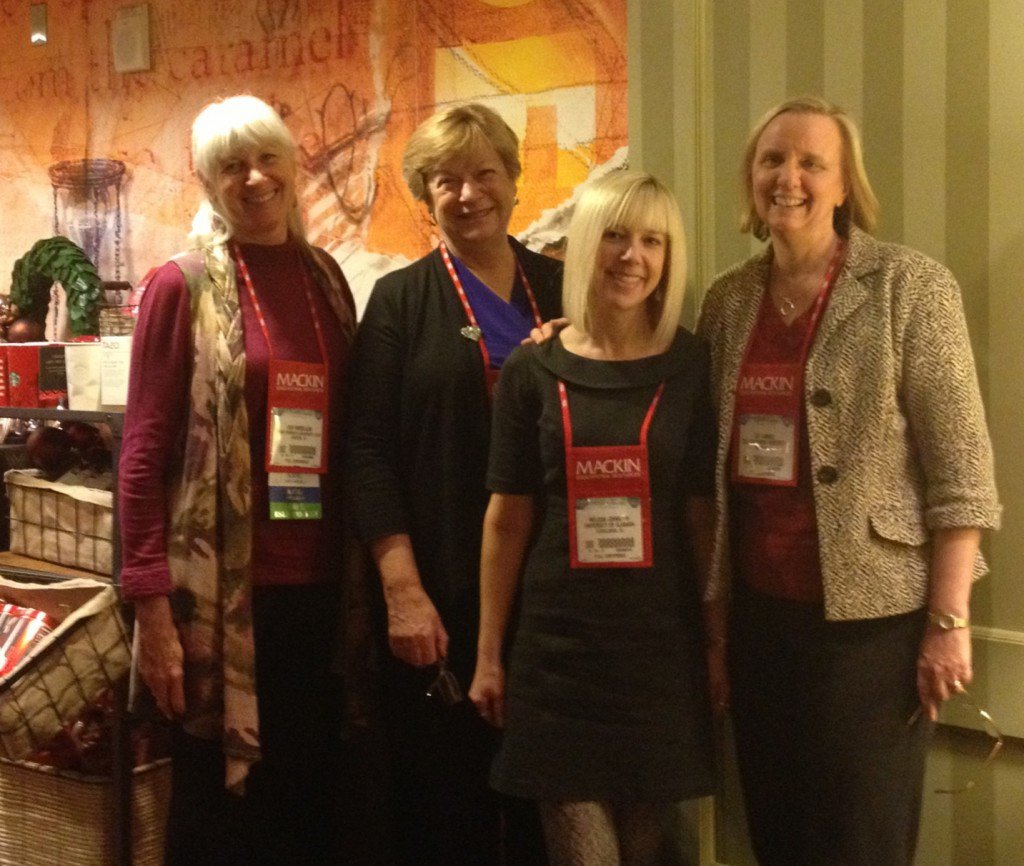
One of my highlights at the recent AASL Conference in Hartford, CT was the chance to get together with my blogging partners face to face.  I had met Sue at the AASL Fall Conference in 2012, but I had not met Judi or Melissa in person, only virtually.  It was a treat to have a “real” conversation with others in the profession who walk the walk, and talk the talk in higher education.  Each one of us has a unique lens and voice for examining aspects of collaboration that improve learning for our colleagues and our students.  I so admire how they can manage the spinning plates: teach courses, conduct research, write books and articles, speak at conferences, and of course-blog!   In the photo above you can see our smiles, as we enjoyed the moment-from the left, Judi, Judy, Melissa, and Sue- convening at Starbucks.  Thanks to all of you, and I look forward to continuing the adventure…

  •  Collaboration for advocacy:

In my posts earlier this fall, I shared the story about collaborative efforts for advocacy by the Vermont School Library Association.  When faced with a situation that required collective action to effect change,  our membership rallied to advocate for retaining language about school library staffing and programs in Vermont State Standards for education.  Currently, as the process is still unfolding, we have been successful in that effort, and expect that the end result will be increased visibility of the role of teacher librarians and commitment to school library programs in educational communities around the state.  I am so thankful for the close collaboration and relationships that have been forged in our work together.  Thank you Denise Wenz, President of VSLA, Heidi Huestis, Chair-Professional Concerns, Marty Reid, Vermont State Librarian, and Jill Remick, Project Director for Education Quality Standards, and many others,  too numerous to mention for all your hard work.

Final thoughts:

In spite of the challenges, it’s a wonderful time to be involved in education and teaching.  I’m thankful for the energy and inspiration that comes from working and collaborating with my friends in the field.  Kudos to you all for making a difference- today and tomorrow.  Happy Thanksgiving.

References:

Morris, Rebecca. (2003, Nov. 25). AASL wrap up. School Library Monthly. Weblog.  Retrieved from:  http://blog.schoollibrarymedia.com/index.php/2013/11/25/aasl-wrap-up/

Peterson, Karyn. (2013, Nov 21).  Vermont school librarians fight to keep libraries in state standards. School Library Journal. Weblog. Retrieved from:  http://www.slj.com/2013/11/schools/vermont-school-librarians-fight-to-keep-libraries-in-state-standards/#_

Photo: Melissa P. Johnston


Collaborating for Technology Integration

Recently I was reading one of the many blogs I read on a weekly basis and I saw this post on Edudemic (which is btw one of my favorites) reporting results from a study on how teachers love educational technology, but they still aren’t using it. This is one of the premises of my own research – that the school librarian is just the person to help out with this problem, so I was immediately interested. You can see the entire post here.

This quote from an elementary school teacher really resonated with me: “Teachers have so much stuff to do in a limited amount of time. If there was a resource available that would do some of the research leg-work that would be wonderful.” There is also additional data how teachers just do not have the time to look for and evaluate resources.

Well you do have a resource available to you (unless they have been eliminated, which is a whole other issue) to do the research leg-work – it is your school librarian!

I again see this as a great opportunity for school librarians to step up as technology leaders in their schools to address the needs of teachers. It is part of the job of the school librarian to stay current on new technologies and how to use them effectively in teaching and learning.

As I listened to presentations at the AASL Conference I heard many ways that some school librarians are working with teachers to integrate technology, yet it seems that many are not. So here are a couple of quick links from the conference to get you on your way to being this resource in your school:

 AASL Best Websites for Teaching & Learning 2013

 AASL Best Apps for Teaching and Learning 2013

Impacts on Student and Teacher Success

Businessman with FolderDuring the past two weeks I have attended the Virginia Association of School Librarians Conference and the AASL Bi-Annual Meeting in Hartford.  In Hartford, I attended a pre-conference led by Audrey Church, Jody Howard, Judy Bivens, and Mona Kirby on Performance Evaluations for School Librarians.  In this session we learned about the wide variety of performance evaluations in effect in the fifty states plus the District of Columbia.  Audrey Church shared information about Virginia’s system where school librarians are evaluated on the same instrument as teachers.  This instrument includes seven measures: professional knowledge, instructional planning, instructional delivery, assessment of and for student learning, learning environment, professionalism, and student academic progress (VDOE, 2012). The seventh one: student academic progress states that “the work of the teacher results in acceptable, measurable, and appropriate student academic progress” and requires teachers to demonstrate their impact on student achievement.  Many teachers (including school librarians), who don’t have test data connected to them, must explore other ways to demonstrate this impact.  School districts have taken different approaches to school librarians.  Some must have a program goal and measure, and others are required to have a student learning goal and measure.  In the latter case, a pre and post-test are often administered to demonstrate growth for example, in information literacy skills.

In this session, a comment by Nancy Everhart caught my attention.  Nancy talked about identifying and measuring other impacts of a school librarian or school library program such as drop out rates or student behavior referrals.  Quite often school improvement plans have achievement goals that are based on growth measured by end of course or end of grade test scores.  But these plans may also include other school (and district) goals.  These could include graduation rates, behavioral referrals and suspensions, and parental involvement.  As school librarians, perhaps it is time that we work to demonstrate our impact on these valued measures.  We know from research that parental involvement has an impact on student achievement (NEA).  School librarians should be able to develop goals, implement programs, and develop measures to evaluate this important goal.  We draw parents in as volunteers, for events such as bookfairs and family reading nights, and can measure parental visits to the library and circulations.

I also believe school librarians have an impact on another area :teacher job satisfaction and teacher retention.  Between 40 and 50% of teachers leave the profession within the first 5 years (Riggs, 2013). How can school librarians work to alleviate this problem?  We can reach out to new teachers with offers to collaborate on lessons and units – not just lessons that will be taught in the library but to help them plan their own classroom lessons. We can be pro-active in identifying and providing materials for those lessons.  And we can offer our assistance as the “information” person in the building.  “Ask me anything and if I don’t know the answer I’ll try to help you find out who to ask or where to look.”  These new teachers will become strong library allies.  New teachers will remember that the librarian was a true lifeline in their early years and will remain instructional partners throughout their careers.  A MetLife Survey (2010)  found that teachers in highly collaborative schools were more satisfied with teaching as a career. Do school librarians who serve as collaborative, instructional partners have an impact on teacher retention?  What about strongly-resourced library collections? How could we demonstrate these impacts?  School librarians work with everyone in the building and therefore, should be able to demonstrate on various measures of school success.

MetLife (2010).  MetLife Survey of the American Teacher: Collaborating for student success.  New York: Metropolitan Life Insurance Company.  http://files.eric.ed.gov/fulltext/ED509650.pdf

NEA (n.d.). Research spotlight on parental involvement in education. http://www.nea.org/tools/17360.htm

Riggs, L. (2013).  Why do teachers quit and why do they stay? Atlantic (18 October)  http://www.theatlantic.com/education/archive/2013/10/why-do-teachers-quit/280699/

VDOE (2012).  Guidelines for uniform performance standards and evaluation criteria for teachers.  Virginia Department of Education. http://www.doe.virginia.gov/teaching/performance_evaluation/guidelines_ups_eval_criteria_teachers.pdf


Are Teacher Librarians Foodies?

As I was reading Sue Kimmel’s latest article in the September/October Knowledge Quest (2013), it occurred to me that food, or imagery about food and food preparation epitomize the work that we do as teacher librarians.  No kidding, think about it. We relate to the underlying axiom that plentiful, tasty food is a pleasurable experience for all humans.  Food, especially chocolate, can break down barriers and open up social interactions that lead to meaningful understandings and relationships.    What we offer in the school library program is access to food for the brain, and a place to partake of those yummy morsels in a social setting.  Am I being too corny???

Joking aside, Sue’s message from “Pass the Chocolate-Planning with Teachers,” paints a picture of a successful sustained plan for collaboration with colleagues in the elementary school where she was a school librarian.  In regularly scheduled planning meetings in the school library, the team of teachers and librarian came together to talk and plan instructional opportunities for their students.  She explains the year long experience, and the various processes that can serve as a model for other school librarians who are looking for fresh ideas for expanding collaboration in their schools.

Central to the planning process, which produced patterns of activity which she labels-orienting, coordinating, making connections, and making sense-was an observed activity that she calls “drifting.”  “Drifting might be considered off task, but it represents one of the ways that team members get to know each other when personal or family information is shared.”(49)    That happened when someone would say, “pass the chocolate.”  Social bonds and commitment to the group are important keys to moving the planning forward. Food and humor provide a respite from the mental hard work of planning, and a time to drift off topic before refocusing on the task at hand.

In this hectic, data driven world of education, it is refreshing to remember that we have to take time to drift.  Our students need this time, too.  Deep, real learning is hard work. When I see teachers and students who are scheduled by the minute, I wonder if we are not taking enough time to reflect on learning for either group.  Social interaction, with or without food builds community and leads to shared experience for learning.

I used to tell students in my school library, “Look around you. Think about this place as a candy store for your brain.  Sample all the different flavors and have a feast.”  As most school librarians, I always had M & M’s or something to share in my office, too.  Monthly faculty pot luck breakfasts or lunches happened in the library media center, and opportunities to build community and collaboration often resulted from them.  I have to admit, I have always been a foodie.

And remember what Joyce Valenza has been saying for years, “Think of the library as more of a kitchen than a grocery store…”  See what I mean, fellow foodies!

References:

Kimmel, Sue. 2013. “”Pass the Chocolate: Planning with Teachers.” Knowledge Quest.  42 (1) : 48-51.

http://joycevalenzafan.blogspot.com/ (accessed Oct. 27, 2013)

Microsoft Clipart

A Fresh Perspective – View from the Outside

My students in my Instructional Design and Development course have been spending the past month observing school librarians conducting instruction at various levels and on various topics. They also spent time interviewing the school librarian about what they observed and their collaborative practices. It has been interesting to see the varied experiences they have had. I also had a few students who have interests in other areas, such as academic and public, which brought a new dynamic and perspectives to the course.

Last night students shared a takeaway from their observation – things they saw that surprised them, things that worked, and things that didn’t work. I was especially glad to hear them talk about seeing practices they had read about and learned about in class in action. They commented on the importance of the school librarian knowing the school’s, the district’s, and/or the state’s curriculum and the difference this can make in what the school librarian is able to do in regards to collaboration and instruction. Several of them mentioned the importance of relationships they observed between school librarians and teachers and the sense of trust. Whereas the students that observed new school librarians noted that they were still trying to build these relationships necessary for collaboration. On the negative side of things I was sad to hear tales of librarians who were not collaborating at all, teaching lessons on AR, teaching “library skill” lessons, and just sitting there checking out books instead of working with students that obviously needed their help.

This is usually the first time most of these students have been into a school library since they were in school as K-12 students themselves and I am always interested in the fresh perspectives on practice that they return with. Several students commented that when they interviewed the school librarian about collaboration and instruction is became a type of self-reflection process for the librarian resulting in the school librarian questioning their own practices.

It makes me wonder how often do we really reflect on our own practices and take the viewpoint of what an outsider would see if they spent a day as a fly on the wall in our libraries.

Isolation is Now A Choice For School Librarians

I was recently struck by the title of a blog post about blogging: “Isolation is now a choice educators make.”   I found this title provocative, not just about blogging, as I thought about choice, isolation, and the word “now.”  Choice seems to be an important aspect to Judi’s discussion of co-teaching versus coaching.  Teachers and school librarians choose to collaborate, teach, and assess student learning together.  Willing partners may choose to take risks together and to support each other in those endeavors. Co-teaching is a choice that we make.
But isolation is also a choice. Isolation is a choice that some educators and some librarians continue to make.  In libraries, we make the choice to work in backrooms when students and teachers are in our building and in our library.  They find and check out books by themselves or with a clerk or volunteer.  Librarians choose isolation in school buildings when they remain in the library instead of working in classrooms, hallways, or labs.  Isolation is a choice if we eat by ourselves instead of in the cafeteria or teacher’s lounge.  We may be the only librarian in our building but isolation is a choice if we don’t belong to listservs or professional organizations.
I also find myself putting emphasis on the word “now.”  The word “now” has an immediacy and urgency. Isolation is now a choice. We now have so many other choices with blogging, twitter, and other forms of social media that we can now choose whether or not we are isolated.  Judy’s description of how the Vermont School Library Association used Skype and Google docs to work collaboratively is a great example of using social media tools to overcome isolation and work collaboratively and productively now. We now live in times of abundant choice.  And in each moment we can choose to become engaged with each other, with teachers and staff, and with students.  Can we now afford to make any other choice?