Building a National Culture of Collaboration

Social_Media_MarketingThank you to the American Association of School Librarians (AASL) blog for putting the Building a Culture of Collaboration blog (BaCoC) in the spotlight last week.  All of the BaCoC co-bloggers are card-carrying active AASL members who promote and model getting involved in our national association for school librarians. As evidenced in Melissa Johnston’s recent post about AASL’s new mission statement and leading through technology, we also promote the work of the association. This is one way to promote a national culture of collaboration.

AASL’s new mission statement is: The American Association of School Librarians empowers leaders to transform teaching and learning.

Yes! To the importance of keeping our focus on teaching and learning! One way to do that is for school librarians to engage in collaborative planning and coteaching with classroom teachers and specialists. Since the publication of Information Power: Building Partnerships for Learning (1998), AASL has promoted the school librarian’s role as an instructional partner: “The school library media specialist can provide strong and creative leadership in building and nurturing this culture of learning, both as a teacher and as an instructional partner… As an instructional partner, the school library media specialist offers a unique expertise in learning theory, information literacy, and information technology to promote learning” (60).

AASL recently released the executive summary from the Senior/Capstone Project’s Task Force.  The task force surveyed high school librarians about their involvement in students’ senior/capstone projects. The graphs provided in the summary show areas of potential growth in terms of school librarians’ involvement in guiding, teaching, and assessing these projects. The task force identified six exemplars from high schools of varying sizes and geographic locations across the U.S. to serve as models for best practices. The report includes at table with contact information and links to four of the six schools’ projects.

Check it out!

Works Cited

American Association of School Librarians (AASL). Information Power: Building Partnerships for Learning. Chicago: American Library Association, 1998. Print.

AASL Senior/Capstone Project Task Force. Executive Summary. American Association of School Librarians. May 2014. Web. 28 Jul. 2014. <http://www.ala.org/aasl/sites/ala.org.aasl/files/content/aaslissues/advocacy/AASL_ExecSummary_SeniorCapstoneProjectTF_2014.pdf>.

Peralta, Paola. Social Media Marketing. Licensed under Creative Commons Attribution-Share Alike 3.0 via Wikimedia Commons. Web. 28 Jul. 2014. <http://commons.wikimedia.org/wiki/File:Social_Media_Marketing.jpg#mediaviewer/File:Social_Media_Marketing.jpg>.
Joint Professional Development Works

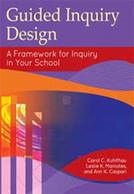
gid_sizedWhen the school year ended in Denton (Texas) Independent School District (DISD), the Denton Inquiry 4 Lifelong Learning Project (DI4LL) sponsored a two and a half day workshop with Dr. Leslie Maniotes, coauthor of Guided Inquiry Design: A Framework for Your School (Libraries Unlimited 2012). The workshop, which was funded by a grant from the Texas State Library and Archives Commission (TSLAC), was designed for preK-12 DISD school librarians to build on the book study they had conducted. School librarians were asked to invite their classroom teacher or specialist colleagues to participate with them, and most of the librarians who attended came with one or more colleagues. I attended as the DI4LL educational consultant.

Not since the heady Library Power days of the mid-1990s have I been as impressed with professional development that involved school librarians and classroom teachers sitting side by side to learn, to identify and solve curricular challenges, and plan inquiry learning lessons and units for student success. As a professional developer, I always ask if classroom teachers are free to attend the workshops I provide for school librarians. And the answer is always the same. The teachers are in the classroom or engaged in some of type of professional development at the time of the workshop so the school librarians are meeting separately. These are missed opportunities.

The DI4LL Inquiry Design Workshop is a testimony to why joint professional development should be the rule rather than the exception. Thanks to Dr. Maniotes and her workshop design that included blocks of time for teams to talk and collaboratively plan, all of the classroom teacher-school librarian teams left the workshop with plans for teaching standards-based inquiry lessons or units of instruction.

Building relationships and instructional partnerships during professional development activities can support educators in enacting their professional development learning in their daily practice. In fact, it almost guarantees it. With shared undersandings, vocabulary, instructional goals, learning objectives for students, and teaching strategies, educators can more easily enact their learning with a colleague who will coteach with them.

Professional development that supports coteaching works. It creates opportunities for school librarians to positively impact student learning alongside classroom teachers. There is no better way for the skills and expertise of two or more educators to improve educators’ teaching and students’ learning.

Congratulations to the DISD classroom teacher/specialist and school librarian teams and to Dr. Maniotes for facilitating their outstanding collaborative work. Thank you also to TSLAC for funding this joint classroom teacher-school librarian professional development opportunity.

Work Cited

Kuhlthau, Carol C., Maniotes, Leslie, and Caspari, Ann. Guided Inquiry Design: A Framework for Your School. Santa Barbara, CA: Libraries Unlimited, 2012.

Equal Access to Professional Development

Growing_SchoolsJust as students deserve equal access to information resources and the services of a professional school librarian, classroom teachers also benefit from working with a professional school librarian. In “How some California schools are overcoming school librarian shortages” written for EdSource: Highlighting Strategies for Student Success  (spotlighted in the previous post), reporter Lillian Mongeau quoted Charles Drew College Preparatory Academy 3rd-grade teacher Laura Todorow: “I feel a school librarian is a non-negotiable necessity in any school.”

School librarians align the library collection with curricula and provide engaging books and electronic resources that support teachers’ teaching. They coplan and coimplement instruction to integrate literature and information into the classroom curriculum. Along with classroom teachers, they model and promote the behaviors of lifelong learning.

The National Education Association image “collaboration is everything” is spot on. When classroom teachers and school librarians coplan and coteach, they provide job-embedded professional development for one another. Teaching together in real time with real students, curriculum, resources, supports, and constraint helps educators become more proficient at their craft. Having a peer to bounce ideas off of and problem solve with is a growth opportunity that every educator should experience.

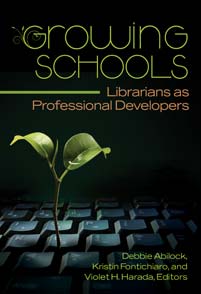
However, in schools without professional school librarians, classroom teachers, principals, and students may be unaware of what they are lacking. For educators who have not experienced the job-embedded professional development benefits provided by collaborating school librarians, I highly recommend Growing Schools: Librarians as Professional Developers (Abilock, Fontichiaro, and Harada 2012). Chapters in this book written by library practitioners and researchers alike highlight some of the many ways school librarians contribute to school improvement efforts.

School librarians can help the school learning community reach capacity. Through providing on-site professional development through coteaching, one-on-one faculty mentoring, and ongoing faculty workshops, school librarians are positioned as leaders who can assist principals in achieving their school improvement initiatives and reaching their academic goals for their schools.

All educators improve their instructional practices through working side by side with colleagues. On-site, job-embedded professional development is a win-win-win-win model for students, teachers, librarians/specialists, and administrators.

All educators deserve this kind of support for their own professional development. With so much pressure on teachers to improve student achievement, having real-time access to professional learning with a school librarian is a social justice issue for educators as well as for students. As Dr. Lankes states, “The greatest asset any library has is a librarian” (29). A professional, 21st-century, collaborating school librarian should be a non-negotiable necessity for every school.

Works Cited

Abilock, Debbie, Kristin Fontichiaro, and Violet H. Harada. Eds. Growing Schools: Librarians as Professional Developers. Santa Barbara, CA: Libraries Unlimited, 2012. Print.

Lankes, R. David. The Atlas of New Librarianship. Cambridge, MA: MIT Press, 2011. Print.

Mongeau, Lillian. “How some California schools are overcoming school librarian shortages.” EdSource: Highlighting Strategies for Student Success. 26 May 2014. Web.  2 June 2014. <http://tinyurl.com/CA-lib-staffing>.


Professional Learning: Where Are the New Models? Part 2

07_advancing_character_map_team_ssTo continue with discussion of the Educational Leadership “Professional Learning: Reimagined” issue…

In their article, Emily Dolci Grimm, Trent Kaufman, and Dave Doty share their experience of “flipped peer observation.” This strategy is teacher-driven, classroom-embedded, and puts the educator who is being observed in the driver’s seat “as the leader and primary learner in the observation process” (25). After the educator identifies the target curricular standard to be observed, she invites colleagues to a meeting to share her focusing question and provide lesson background. During the observation, the observers collect data related to the targeted standard, and in a post-observation debriefing the educator and observer team discuss the outcomes in terms of the teacher’s focus. In their article, Grimm, Kaufman, and Doty provide guidelines for these three components and share the positive results of this process for one particular teacher.

Privileging the teacher’s voice and her own priorities for professional learning are the foundations for the success for this strategy. The multiple perspectives on instruction and students’ practice are strengths of the process they describe. But I wonder how many school districts will support a process in which a team of teachers must leave their own classrooms in order to provide this kind of professional development for their colleagues. This may work in schools with shared planning time during contract hours, but this level of commitment is beyond what I have experienced in the districts where I have worked or observed.

State-certified school librarians who serve in schools with flexible schedules and paraprofessional support have the opportunity to coteach with peers whenever the need arises. A classroom teacher or specialist and the school librarian can coplan (during the classroom teacher’s planning time) and schedule time for coteaching in the classroom, library, lab, on athletic field, or whatever environment is most conducive to students’ meeting the learning objectives. Along with their colleagues, they can achieve the goal of job-embedded professional development that improves the practices of both classroom teachers and school librarians and the learning outcomes for students. Win-win-win.

Last week on this blog, Judy Kaplan pointed readers to a crowdsourced video: Principals Know: School Librarians Are the Heart of the School.

Dr. David Loertscher who teaches school librarianship at San Jose State University asked his graduate students to conduct a content analysis of the video in search of keywords and concepts that were most often repeated by the ten school administrators from seven different schools in six different states. Their findings: “professional development” was the activity most often ascribed to effective school librarians and valued by these administrators.

To quote Principal Paula Godfrey, Gale Elementary School, Tucson, Arizona, “Professional development happens as teacher librarians and classroom teachers collaborate together on projects for their students.”

To me that is professional learning reimagined. That is truly job-embedded professional development—in which educators work toward shared goals and learning outcomes for students and learn with and from one another in real time with real students, actual curriculum, resources, supports, and constraints of their actual teaching environment. This is an opportunity on which classroom teachers, specialists, librarians, principals, and administrators should capitalize in order to help all educators reach their capacity and all students to reach their potential!

Works Cited

Debra (Librarian) and Melody (3rd-grade Teacher) Coteaching Photo from the Personal Collection of Judi Moreillon – Used with Permission

Godfrey, Paula. “Principals Know: School Librarians Are the Heart of the School.” April 2014. Web. Youtube.com. 8 May 2014. <http://youtu.be/bihGT7LoBP0>.

Grimm, Emily Dolci, Trent Kaufman, and Dave Doty. “Rethinking Classroom Observation.” Educational Leadership 71.8 (2014): 24-29. Print.


Professional Learning: Where Are the New Models? Part I

09_Advanced_jm_rt_writing_conferences_ssI believe that educators, school librarians in particular, should maintain a membership in the Association for Supervision and Curriculum Development (ASCD), read ASCD publications, and be as involved as possible in this organization. The target audience for ASCD’s journal Educational Leadership is “leaders in elementary, middle, and secondary education but it is also for anyone interested in curriculum, instruction, supervision, and leadership in schools” (quoted from the masthead of the journal).

In addition to the fact that school librarians should be leaders in curriculum and instruction in their schools, many principals are ASCD members and read Educational Leadership during the academic year. Since a principal’s understanding of the role of the school librarian in the learning community is essential to our success, school librarians should be able to talk with their principals on topics that ASCD identifies as important for their readership.

Last week when this month’s issue arrived in my mailbox, I was thrilled to see the title “Professional Learning: Reimagined.” I saved it to read until I could immerse myself in the content, which I did over this past weekend. Just to mention the foci of a few articles… The opening feature by Dr. Guskey, from the University of Kentucky, focuses on professional learning designed with backward planning from the desired student learning outcomes and evidence-based practice. Check. Articles on video capture of teaching, coaching, teacher-taught tech camps, and the failure of top-down approaches… Check. Dr. Richard DuFour, Professional Learning Communities (PLCs) expert, provides successful PLCs case studies. Check. While I don’t disagree with any of the articles in this issue, this issue fell short for me in terms of “reimagining” professional learning.

There were two articles in the issue that had the potential to delve deep into the growing understanding of the value of job-embedded professional development—one by Dr. DuFour and one by Emily Dolci Grimm, Trent Kaufman, and Dave Doty. I want to share some of Dr. DuFour’s ideas and build on those for a discussion of the Grimm, Kaufman, and Doty article on Thursday. I hope you have read this issue and will join in and make this a conversation.

In his article “Harnessing the Power of PLCs,” Dr. DuFour shares four case studies where PLCs using different strategies have been effective in supporting teachers to collectively improve student learning outcomes. He bases his article and scholarly work on research-based evidence that effective professional development is:

• Ongoing, with sustained, rather than episodic and fragmented, focus.

• Collective, rather than individualistic.

• Job-embedded, with teachers learning as they engage in their daily work.

• Results-oriented, with activities directly links to higher levels in student learning.

• Most effective in schools and districts that function as professional learning communities (31).

This research in consistent with my own experience as an educator and school librarian. The first four keywords italicized by Dr. DuFour are the very reason PLCs can be effective. However, in the four case studies discussed none of them mentions real-time job-embedded professional development where educators learn as they engage in their daily activities teaching students. While there is a collective focus on student learning outcomes and face-to-face or virtual observations of successful practices in other classrooms with other teachers’ students in the same school or across the district, none of these educators were learning while coteaching during the school day with a peer (one another educator) in the same classroom with their own students, resources, supports, and constraints.

Clearly, the PLC strategies offered in the article were successful for these schools but could they have been even more successful if educators’ professional learning happened in their own classrooms in the company of a coteacher who was equally invested in the students’ learning outcomes? My answer is an enthusiastic “yes!”

In DuFour’s article, Regina Owens, the first principal, at The Virtual School of Springfield ISD, noted: “In a traditional school, you hoped teachers implement the new strategy, but it was difficult to be certain” (35).

But there is a way to be certain in schools with a 21st-century school librarian. When classroom teachers and school librarians coplan for standards-based, data-driven instruction targeted to specific student learning outcomes, administrators can be assured that best practices are being implemented in the classroom and in the library. Two or more educators who coplan, coimplement, and coassess student learning outcomes can develop their instructional proficiency in job-embedded professional development learning with and from each other in real time.

What has been your experience of classroom-library collaboration that has led to improved student learning? How is this low-threat, organic strategy conducive to educator learning?

On Thursday, I will continue my response to this issue of Educational Leadership.

Works Cited

DuFour, Richard. “Harnessing the Power of PLCs.” Educational Leadership 71.8 (2014): 30-35. Print.

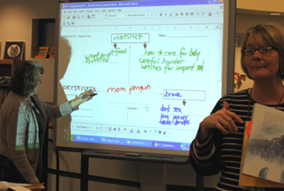
Judi Moreillon (librarian) and Rochelle Thompson (5th-grade teacher), cofacilitating writing conferences in Rochelle’s classroom, from the Personal Collection of Judi Moreillon – Used with Permission

Remodeling Literacy Together, Part 1

Cameron_collabplanning2The National Center for Literacy Education (NCLE)  recently published a report called “Remodeling Literacy Together: Paths to Standards Implementation.”

NCLE, which is a coalition of literacy organizations that includes the American Association of School Librarians, the International Reading Association, National Council of Teachers of English, and others, conducted a national survey of over 3,000 teachers to learn about their preparation and confidence related to implementing the Common Core State Standards (CCSS).

Whether or not you teach in a CCSS state, the findings of this survey should be of interest to everyone in the field of education. Every state, district, and school in the U.S. is placing an increased emphasis on raising the rigor in literacy teaching and learning. There are many leadership opportunities for school librarians in these findings.

•    Nationwide, teachers feel ill-prepared to help their students achieve the new literacy standards (NCLE).

I believe that all educators feel challenged to teach literacy skills. We know students need to master traditional literacy skills as well as 21st-century skills. This is a tall order when many children do not arrive at school with rich literacy backgrounds, need on-going support for applying reading comprehension strategies across genres, content areas, and grade levels and need to learn how to effectively use technology tools to interact with information and produce knowledge. This is a tall order.

Who can help? A 21st-century school librarian!

•    Working with peers is the most valued support for standards implementation (NCLE).

As a long-time collaborating librarian, this finding does not surprise me. I know that my colleagues and I have benefited tremendously through coteaching. The extra challenge for classroom teachers is that it is difficult for them to work with one another during the school day in order to achieve true job-embedded professional development. If educators combine classes, they have twice as many students whose needs they must meet. And few administrators have the flexibility to release teachers from their primary teaching responsibility so they can coteach with their peers.

Who can help? A 21st-century school librarian who can coplan and coteach with classroom teachers in real-time, with real students, real curriculum, real resources, real supports, and constraints of the actual teaching environment can be the peer with whom classroom teachers work. Through coteaching, we can help classroom teachers meet their need for standard-based lesson implementation and improve our literacy teaching practices together.

•    Time for working together in schools is decreasing (NCLE).

This is an ill-advised situation that school-level and district-level administrators should pay attention to and address. When new standards or initiatives are introduced into a learning community, educators need to break out of the isolation of their classrooms, labs, and libraries in order to ensure that innovations spread throughout the learning community.

Who can help? A 21st-century school librarian has expertise in using technology tools for asynchronous collaboration. Using Google Drive docs, wikis, and other Web 2.0 tools to conduct collaborative planning can provide effective venues for working together when face-to-face time is short or not readily available.

On Thursday, I will respond to some of the additional findings of this important data from the field.

Works Cited

“Remodeling Literacy Learning Together: Paths to Standards Implementation.” Literacy in Learning Exchange. 18 Feb. 2014. Web. 31 Mar. 2014. <http://www.literacyinlearningexchange.org/remodeling-together>.

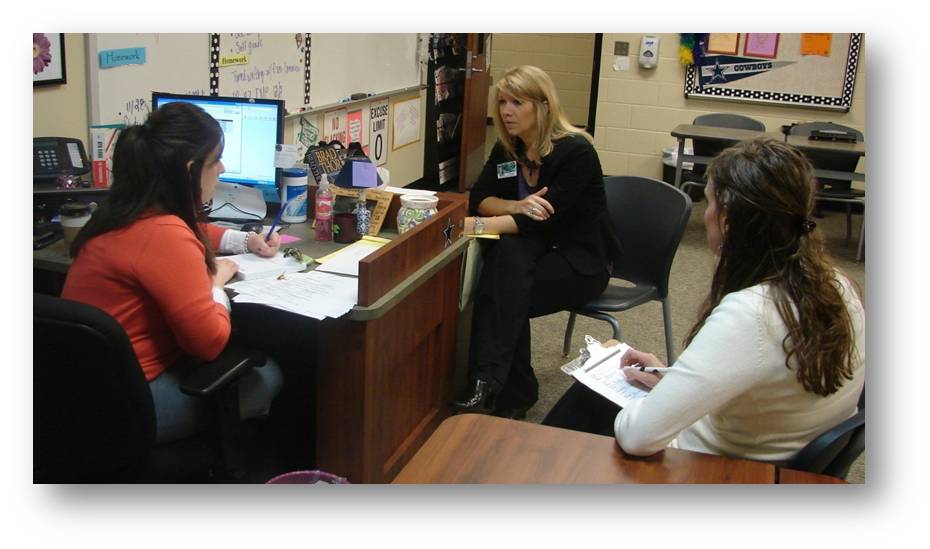
Coplanning Photograph of Librarian Stacy Cameron and her Colleagues – Used with Permission

Adult Learners in the Learning Commons

Indian ElephantOne of the resources that I learned about at the 19th Treasure Mountain Research Retreat “The Learner in the Learning Commons” was a video: “Connected Learning: Hands-On, Learner-Focused, Life-Long.” The idea of helping learners learn how to learn, to be flexible and adaptable, to address real-world problems made a strong connection for me with the engagements school librarians and classroom teachers can design with an inquiry learning model.

In the video, members of the Digital Media and Learning Research Hub (DML Research Hub) speak eloquently about how educators are asking the wrong question. Rather than asking “what do we want students to learn?” we could/should be asking “what experience do we want students to have?” (Connie Yowell, Director of Education, MacArthur Foundation).

For me, Dr. Yowell’s question is the essential question around which inquiry learning educators/facilitators develop student learning engagements. In an inquiry framework, outcomes are not the “facts” noted in the standards, but the processes that are also indicated in the standards such as developing a research plan, asking meaningful questions, identifying resources, and so on. These transferrable standards encompass the very processes that lead learners to active engagement with the ultimate goal of learning how to learn.

As inquiry guides, educators begin by motivating students and immersing them in content before students pose authentic and personally meaningful questions. Inquiry educators help learners identify resources, including mentors who can support their learning, sift and sort through information, construct and present new knowledge, and reflect on their learning process throughout the experience.

As long as we have a place called “school” with adults called “educators” who guide students’ learning, it’s my opinion that we must address the learning needs of educators. For me, our challenge in education is to take action to improve the practices of the “Adult Learners in the Learning Commons: The Elephant in the Room.” (Hence I published a paper with that title in the Treasure Mountain Research Retreat Proceedings.)

As Dr. Hay notes and I concur, school librarians are perfectly positioned to be facilitators of adult learning (while they themselves improve their own practices in the process). This culture of collaboration is essential for more engaged and meaningful student learning as well as for improving instructional practices and ensuring the sustainability of the school librarian profession.

Note: The DML Research Hub is concerned with an “equitable, participatory, and effective ecosystem of learning keyed to the digital and networked era. We are a collective of researchers, practitioners, and policyshifters analyzing the impact of the Internet and digital media on education, politics, and youth culture. The hub is part of the University of California’s systemwide Humanities Research Institute and is supported by the MacArthur Foundation” (quoted from their Web site).

To stimulate your thinking about the possibilities for education transformation, I recommend all of the videos found on the DML Research Hub Vimeo channel.

References

Askew, Nic. 2012. Connected Learning: Hands-On, Learner-Focused, Life-Long. Vimeo video, Posted by DML Research Hub. https://vimeo.com/37639766

Elephant image accessed from Microsoft Clipart

Instructional Partnerships Deliver Success

wiki_logo_sizedThis is a special invitation to join us for a preconference workshop at the AASL National Convention next week in Hartford. Along with a team of school librarians and classroom teachers at each instructional level, I will be copresenting: Instructional Partnerships that Deliver Success: Meeting the Leadership Challenge. For a sneak peak, you can access our presentation wiki.

Our ½ -day workshop will be held on Thursday, November 14th from 8:30 to noon. As you can see from the agenda, we will share information and engage in conversations about how school librarians can enact successful instructional partnerships with classroom teachers. For one hour, the participants interact in instructional level groups and hear first-hand examples of effective strategies for working collaboratively with colleagues. We are delighted that classroom teachers will be joining us to provide first-person testimonials of their collaborative work with their school librarian.

Participants  will complete a puzzle that shows how inquiry learning and reading comprehension strategies align the work of school librarians as defined by AASL’s Standards for the 21st-Century Learner with the Common Core College and Career Readiness Standards. In addition, we will devote a half-hour slot to modeling and practicing close reading to help readers comprehend complex text.

And all along the way, we will have fun! Come learn with us because Instructional Partnerships (Do) Deliver Success. Together, we can rise up to meet the challenge! To find out about registering, go to the AASL Preconference Web page. If you have questions about our workshop, please post them here, or you can email me directly at: info@storytrail.com

I would also encourage you to visit the exhibit hall during the conference. In addition to vendors’ displays and presentations, you will find demonstrations in the AASL Booth related to various AASL resources. I would be remiss if I failed to mention our book Best of KQ: Instructional Partnerships: A Pathway to Leadership. Coeditor Susan Ballard and I will be signing in the AASL Booth #1131 on Saturday, November 16th from 9:30 to 10:00 a.m.

And please stop by the Eerdmans Books for Young Readers Booth #328 where I will be signing my new picture book Ready and Waiting for You.

See you in Hartford!

Word cloud created at Wordle.net

Rising to the Challenge

aasl13_presenterThe 16th National American Association of School Librarians Conference is coming to Hartford, Connecticut from November 14th – 17th. This biennial conference offers a gold mine of professional development opportunities for those lucky enough to attend. For school librarians serving in states where the school librarian division is only a part of their state conference, this conference devoted solely to the work and needs of school librarians may be particularly valuable.

“Rising to the Challenge” is an apt theme for this conference. Across the nation, school librarians are being asked to step up in many different ways. Demonstrating and documenting our contributions to student learning outcomes is a huge part of our challenge in 2013. In states that have adopted the Common Core State Standards or are rolling out other curriculum initiatives, school librarians are working together to determine their place in helping students and teachers succeed.

The one book, one conference title is 18 Minutes: Find Your Focus, Master Distraction, and Get the Right Things Done by Peter Bregman. Mr. Bregman will speak at the closing session on Saturday.

You can access information about the preconference workshops (Registration is still open), concurrent sessions, and special events on the AASL conference Web site.

Whether or not you are able to attend in person, you can join the conference Ning. You can also choose to follow the conference via social media. The Twitter hashtag is #aasl13.

There are so many ways to connect, learn, and network. “See” you there!